
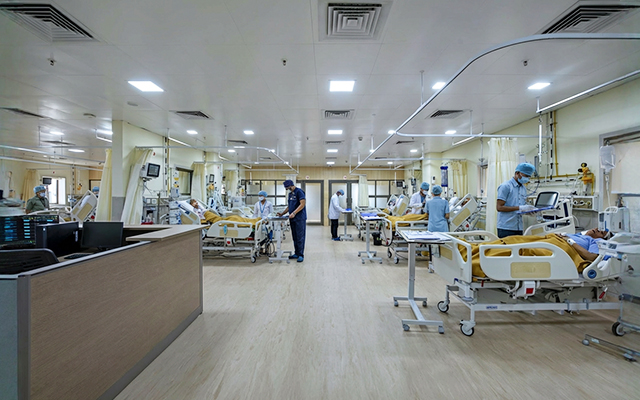
Most health decisions in ‘our city’ don’t start with urgency. They start with compromise.
“I’ll show it to the local doctor first.”
“Let’s not overreact.”
“If it gets worse, then we’ll go.”
This approach feels practical, familiar and affordable. But in many cases, it quietly delays the care that matters most.
Knowing when a regular clinic is enough—and when it isn’t—can determine outcomes long before an emergency forces the choice.
Today’s guide is for families in Behala, Joka (and nearby) who want clarity on when to visit a superspeciality hospital in South Kolkata before time runs out.
How do you know which is right – Clinic or hospital
A clinic is suitable for short-term, uncomplicated problems.
A superspeciality hospital is needed when symptoms persist, worsen, involve multiple systems, or require advanced diagnostics.
Most people don’t struggle to find doctors. They struggle to know when to visit where…!
Clinics are familiar. You know the doctor. The visit is quick. The reassurance feels enough. But familiarity can blur judgment—especially when symptoms linger.
What is the difference between a superspeciality hospital and a clinic
Understanding this difference removes guesswork.
For your clarity
| Regular Clinic | Superspeciality Hospital |
| Single-doctor assessment | Multi-specialist evaluation |
| Symptom-based treatment | Root-cause diagnosis |
| Basic investigations | Advanced imaging & diagnostics |
| Short-term relief focus | Long-term outcome planning |
The difference between a superspeciality hospital and a clinic is not size or branding. It is the depth of capability—especially when problems are not straightforward.
Simply put –
- Clinics manage.
- Superspeciality hospitals investigate, coordinate, and intervene early.
The silent warning sign families often miss: “It’s still not better”
Any symptom that lasts beyond a few weeks, recurs, or worsens despite treatment requires specialist-level evaluation.
Common examples include:
- Pain that settles but keeps coming back
- Breathlessness that feels manageable but persistent
- Recurrent infections
- Fatigue with no clear explanation
These are not emergencies—but they are signals.
This grey zone is often the point at which a superspeciality hospital in South Kolkata becomes the right next step for families in Behala, Joka (and nearby), rather than a last resort.
When familiar advice reaches its limit
Local doctors do important work and play a vital role. But no single practitioner can cover every complexity.
Pause and Rethink If
- Multiple medicines haven’t solved the issue
- Different doctors offer different explanations
- Reports are “borderline” or inconclusive
- Symptoms involve more than one body system
This is usually when to choose specialist care over general practice—not because something is dramatic, but because clarity is missing.
Why families delay escalation: The reality
Let’s be real
Families delay because
- Hospitals feel overwhelming
- Specialist care sounds expensive
- Symptoms don’t seem “serious enough”
- Family responsibilities come first
But illness doesn’t wait for convenience. And delaying is one of the most common reasons manageable conditions become complex.
Which conditions should not remain at the ‘clinic level’ for long
Persistent, multi-system, or unclear conditions require specialist evaluation and coordinated care.
Examples often underestimated:
- Ongoing abdominal pain with weight loss or anaemia
- Repeated breathlessness or chest discomfort
- Fever lasting more than 2–3 weeks
- Neurological symptoms like numbness or weakness
- Digestive problems that don’t respond to treatment
These fall under complex health conditions that require specialist care, even if they start quietly.
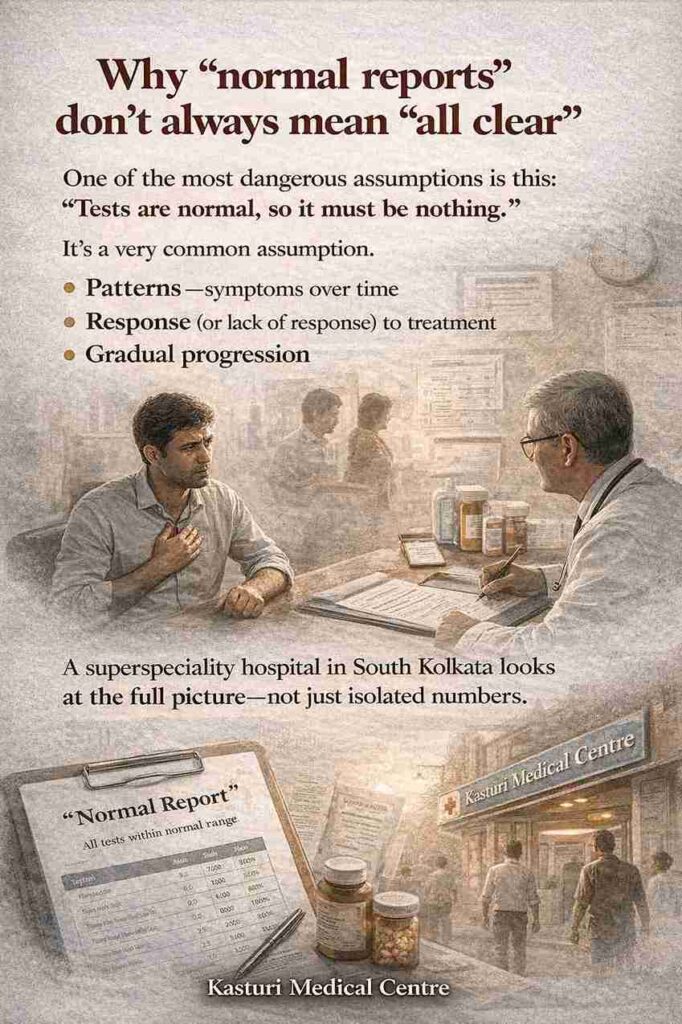
When waiting stops being harmless
Waiting is reasonable only when symptoms are clearly improving. Waiting without progress increases risk.
Waiting without direction is still a decision. And it often removes the advantage of early intervention.
When families search for advanced medical treatment options near me
This search usually appears when:
- Surgery may be required
- Complications are possible
- Multiple opinions are needed
- Long-term planning matters
These are moments when advanced medical treatment options near me are not excessive—they are appropriate.
A simple decision guide that families can actually use
| Situation | Best Care Setting |
| Cold, fever under a week | Clinic |
| New but severe symptoms | Hospital |
| Symptoms lasting weeks | Superspeciality hospital |
| Repeated treatment failure | Superspeciality hospital |
| Heart, brain, gut, and kidney involvement | Superspeciality hospital |
If you’re unsure, it’s usually a sign to escalate—not wait.
How do you know a hospital is truly safe—not just familiar?
Hospital accreditations show whether patient safety, diagnostics, and treatment systems are independently audited or self-claimed.
Many hospitals look similar from the outside. The difference lies in what happens behind the scenes—especially during complex care.
What accreditations actually protect patients from
At a superspeciality hospital in South Kolkata, accreditations are functional safeguards, not decorations.
- National Accreditation Board for Hospitals & Healthcare Providers (NABH)
Audits infection control, surgery safety, emergency response, ICU protocols, and patient rights.
- National Accreditation Board for Testing and Calibration Laboratories (NABL)
Ensures diagnostic reports are accurate and standardised—critical when treatment depends on lab values.
- Quality Council of India (QCI)
Sets and monitors national healthcare quality benchmarks to prevent unsafe shortcuts.
Why this matters:
During prolonged or serious illness, outcomes depend not just on doctors but on systems that are consistent, monitored, and accountable.
“Why You Should not just wait and watch?”
Waiting is safe only when symptoms are improving. Waiting while symptoms stagnate or worsen increases risk.
Waiting feels harmless. But in medicine, waiting without direction is a decision.
If there’s no clear timeline for improvement, waiting becomes silent neglect.
Which situations demand advanced medical treatment options near me?
Believe it or not, many ask this daily on AI and Google search—and for good reason, too!.
You should actively seek advanced medical treatment options near me when:
- Surgery may be needed
- ICU-level backup might be required
- Long-term disease management is involved
- Complications are possible
This is where a superspeciality hospital in South Kolkata provides safety, not excess.
Why local access changes behaviour
People act sooner when care feels reachable. That’s why proximity to a superspeciality hospital in South Kolkata matters—it removes hesitation and delay.
A note on trust and process – not promotion
At Kasturi Medical Centre, families are often seen when clinics are no longer enough, but emergencies haven’t happened yet. That middle window is where outcomes are decided.
What families often say later
- “We thought we had time.”
- “We didn’t think it was serious.”
- “We wish we had come earlier.”
These sentences repeat across conditions, ages, and backgrounds.
What’s The Final Takeaway
Most health problems don’t turn serious overnight. They turn serious when waiting replaces clarity.
This guide exists to help families recognise that middle window, when a clinic is no longer enough but an emergency hasn’t arrived. Choosing the right level of care early often changes outcomes long before urgency forces the decision.
Book your private session today.
People Also Ask
How to Choose the Right Hospital in Kolkata
Choose based on capability, not convenience. Look for a hospital that offers multi-specialist care, reliable diagnostics, emergency backup, and recognised accreditations (like NABH or NABL). Location matters, but systems, coordination, and experience matter more, especially when symptoms are unclear or ongoing.
What Is the Best Time to Visit a Patient in the Hospital?
Most hospitals in Kolkata allow visitors during late morning or early evening hours. These times usually avoid doctor rounds, tests, and rest periods. Always check the hospital’s visitor policy, as ICUs and recovery areas often have stricter rules.
What Is the “Two Midnight Rule” in Hospitals?
The two-midnight rule is used to decide whether a patient needs short observation or formal admission. If a doctor expects care to extend across two midnights, admission is usually recommended. It helps hospitals plan care appropriately and avoid unnecessary stays.
What Is the 3-Day Rule in a Hospital?
The 3-day rule usually refers to how long a patient is observed or treated before the next step is decided. If symptoms do not clearly improve within about three days, doctors often reassess the diagnosis, adjust treatment, or recommend further tests or specialist care.
It’s a safety checkpoint, not a deadline.
What Is the 3-Midnight Rule?
The 3-midnight rule looks at how long care spans across nights, not just days. If a patient requires treatment spanning three midnights, it usually signals the need for more structured inpatient care rather than short-term observation. This helps hospitals plan resources and ensures patients receive appropriate monitoring.