
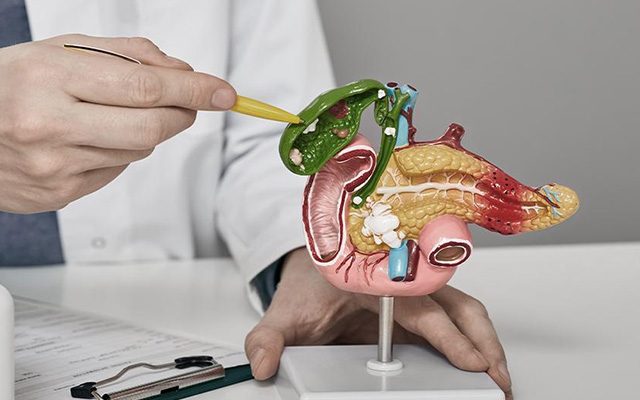
Gallbladder removal surgery, medically known as a cholecystectomy, is a common procedure performed to treat symptomatic gallstones, gallbladder inflammation, infection, or bile flow obstruction. Although the gallbladder stores bile, it is not essential for survival. After surgery, bile flows directly from the liver into the small intestine, allowing digestion to continue normally.
Patients considering gallbladder laparoscopic surgery are often advised to understand the available surgical options, procedural steps, recovery expectations, and possible complications.
What Symptoms Need Gallbladder Removal?
Gallbladder removal may be recommended when gallstones or other gallbladder disorders cause recurrent symptoms, inflammation, infection, or blockage of normal bile flow. Early evaluation helps prevent complications and supports timely treatment.
Gallbladder Conditions That May Require Surgical Treatment
- Symptomatic gallstones
- Acute cholecystitis (gallbladder inflammation)
- Chronic gallbladder inflammation
- Gallbladder infection
- Bile duct obstruction caused by gallstones
- Recurrent biliary colic (repeated gallstone-related pain)
Common Symptoms That May Indicate The Need For Gallbladder Removal
- Severe pain in the upper right abdomen
- Recurrent abdominal pain after meals, especially fatty foods
- Pain that radiates to the back or right shoulder
- Nausea and vomiting
- Persistent bloating, indigestion, or digestive discomfort
- Fever or chills associated with gallbladder inflammation
- Jaundice (yellowing of the skin or eyes) caused by blocked bile flow
- Recurrent gallbladder attacks that interfere with daily activities
Not every patient with gallstones requires surgery. However, persistent symptoms, recurrent attacks, infection, inflammation, or bile duct blockage may indicate the need for gallbladder removal. A thorough clinical assessment and appropriate imaging studies help determine the most suitable treatment approach.
Types Of Gallbladder Removal Surgery
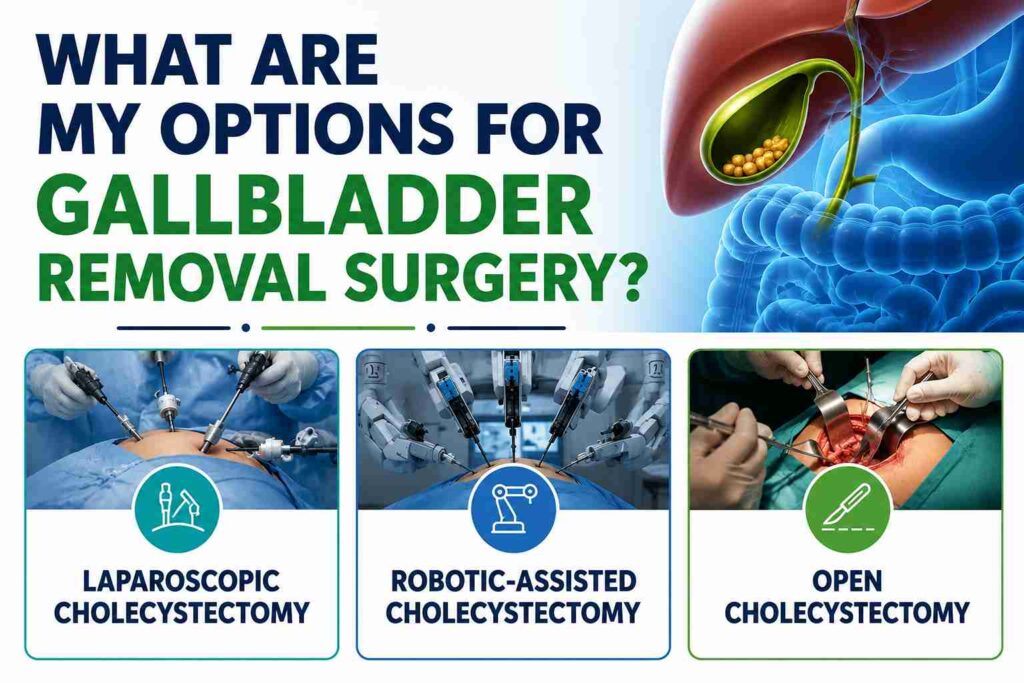
The surgical approach depends on the patient's anatomy, severity of inflammation, previous abdominal surgeries, and overall health status.
| Surgical Type | Description |
| Laparoscopic Cholecystectomy | Keyhole surgery is performed through small incisions using a camera |
| Robotic-Assisted Cholecystectomy | Robot-assisted minimally invasive procedure with enhanced precision |
| Open Cholecystectomy | Traditional surgery is performed through a larger abdominal incision |
Laparoscopic Cholecystectomy
Laparoscopic cholecystectomy is the most commonly performed gallbladder surgery and is considered the gold standard for the treatment of symptomatic gallstones, biliary colic, acute cholecystitis, and other forms of gallbladder disease. Often referred to as keyhole surgery or minimally invasive gallbladder surgery, this procedure involves the surgical removal of the gallbladder through three to four small abdominal incisions.
During this camera-guided surgery, the surgeon inserts a high-definition laparoscope and specialised laparoscopic instruments to visualise the operative field, identify important structures within the bile duct anatomy, and safely remove the diseased organ.
- Minimally invasive: Performed through tiny abdominal punctures rather than a large incision.
- Reduced pain: Causes significantly less postoperative discomfort than traditional abdominal surgery.
- Minimal scarring: Leaves only small, barely noticeable scars.
- Shorter recovery time: Most patients resume routine activities sooner.
- Reduced hospitalisation: Many patients are discharged on the same day.
- Lower risk of wound complications: Smaller incisions support smoother healing.
- Faster return to normal activities: Recovery is generally quicker than with open surgery.
- Preferred standard: Most common gallstone surgery performed worldwide.
Robotic-Assisted Cholecystectomy
Robotic-assisted cholecystectomy is an advanced form of robotic surgery that combines minimally invasive techniques with advanced surgical technology. Using a sophisticated robotic surgical system, the surgeon controls specialised instruments from a computer console while maintaining complete control throughout the procedure.
The technology enhances surgical precision, provides superior visualisation of complex anatomical structures, and can be particularly beneficial in selected patients with complex gallbladder disease, difficult anatomy, or situations requiring meticulous dissection around the common bile duct.
- Robotic precision: Every movement is directed by the surgeon.
- 3D visualisation: Delivers magnified, high-definition views of deep tissues.
- Enhanced dexterity: Wristed instruments provide greater flexibility and manoeuvrability.
- Surgical accuracy: Supports precise tissue handling in challenging cases.
- Enhanced control: Tremor-reduction technology improves movement stability.
- Small incisions: Preserves the benefits of a minimally invasive surgical procedure.
- Advanced technology: Integrates digital imaging with refined instrument control.
- Targeted use: Suitable for selected patients with difficult dissection requirements.
Open Cholecystectomy
Open cholecystectomy is a traditional form of abdominal surgery that requires a single larger incision beneath the right rib cage. The surgeon directly visualises and removes the gallbladder without laparoscopic or robotic assistance.
Although less common today, this procedure remains an important safety alternative when minimally invasive techniques are not appropriate. It may be recommended in cases involving severe inflammation, acute infection, gallbladder perforation, extensive adhesions, significant scar tissue from previous abdominal surgery, or certain situations requiring emergency surgery.
- Direct access: Provides full exposure through a traditional abdominal incision.
- Safety alternative: Used when minimally invasive gallbladder surgery cannot be performed safely.
- Clear visibility: Helpful when managing dense scar tissue or distorted anatomy.
- Bleeding control: Allows immediate intervention during complex surgical situations.
- Complex cases: May be necessary for severe infection or advanced gallbladder disease.
- Hospital stay: Usually requires several days of inpatient monitoring.
- Postoperative recovery: Recovery generally takes longer than minimally invasive approaches.
- Longer healing period: Patients need additional time before returning to normal activities.
Which Type of Gallbladder Removal Is Most Common?
For most patients with gallstones, recurrent gallbladder attacks, biliary colic, or an inflamed gallbladder, laparoscopic cholecystectomy remains the preferred approach.
However, the most appropriate surgical procedure depends on the severity of the condition, the patient's anatomy, and the surgeon's clinical assessment.
How Is Gallbladder Removal Surgery Performed?
Surgical Workflow- Table Overview
| Step | What Happens |
| 1 | General anaesthesia is administered |
| 2 | The abdomen is inflated with carbon dioxide gas |
| 3 | The cystic duct and artery are identified and secured |
| 4 | The gallbladder is detached from the liver |
| 5 | The gallbladder is removed through a small incision |
| 6 | Gas is released, and incisions are closed |
Gallbladder surgery is generally completed within one to two hours under general anaesthesia. Below is a step-by-step procedure.
Step 1: General Anaesthesia
Gallbladder surgery begins with the administration of general anaesthesia, ensuring the patient remains asleep, comfortable, and pain-free throughout the procedure. Once the anaesthesia takes effect, the surgical team prepares the abdomen and proceeds with the operation.
Step 2: Creation Of Surgical Working Space
During laparoscopic surgery, carbon dioxide gas is introduced into the abdomen. This creates adequate working space and improves visualisation of internal structures.
Step 3: Identification Of The Gallbladder Structures
The surgeon identifies the cystic duct and cystic artery. These structures are secured using surgical clips and carefully divided.
Step 4: Gallbladder Removal
The gallbladder is separated from the liver and removed through one of the small access ports. This keyhole technique minimises tissue disruption while maintaining surgical precision.
Step 5: Closure Of Incisions
The gas is released, surgical instruments are removed, and the incisions are closed using sutures, staples, or surgical glue. Many patients undergoing gallbladder laparoscopic surgery can return home on the same day.
Recovery After Gallbladder Removal Surgery
Immediate Post-Operative Phase
The immediate phase focuses on safely waking from anaesthesia and stabilising your pain. Medical staff monitor vital signs in the recovery room before moving you to a ward. Most laparoscopic patients can stand, walk gently, and sip fluids within a few hours of their procedure.
- Anaesthesia tracking: Vital signs are monitored closely until you awake.
- Pain control: Medications administered intravenously or orally.
- Early walking: Gentle movement encouraged to prevent blood clots.
- Fluid intake: Sips of water allowed once nausea passes.
- Gas relief: Early movement helps ease surgical bloating discomfort.
- Quick discharge: Laparoscopic patients usually go home the same day.
Short-Term Home Healing
Short-term home healing involves managing mild discomfort and monitoring your small incision sites. Patients must keep wounds clean and dry while watching for signs of infection. Shoulder pain from residual surgical gas is common but disappears within a few days.
- Wound hygiene: Keep surgical incisions clean, dry, and intact.
- Activity balance: Prioritise rest but maintain light daily walking.
- Symptom tracking: Monitor for fever or worsening abdominal pain.
- Bland diet: Eat small, low-fat meals to ease digestion.
- Gas pain: Walk frequently to dispel trapped abdominal gas.
- Medication use: Take prescribed pain relievers only as directed.
Long-Term Adjustments
Long-term adjustments focus on permanent digestive adaptation and returning to strenuous physical activities. Because the liver now secretes bile directly into the intestines, bowel habits may temporarily change. Most individuals resume heavy lifting, intense workouts, and normal diets within six weeks.
- Bile flow: The liver adjusts to delivering bile without storage.
- Diet expansion: Reintroduce healthy fats slowly into your meals.
- Stool changes: Temporary loose stools resolve within a month.
- Fibre support: Soluble fibre helps regulate post-surgery digestive tracts.
- Lifting limits: Avoid heavy lifting for four to six weeks.
- Full stamina: Normal energy levels fully return by week six.
The overall recovery experience differs from person to person. Maintaining hydration, following activity restrictions, and attending follow-up appointments can support smoother healing.
At Kasturi Medical Centre in Joka, patients undergoing laparoscopic gallbladder surgery receive personalised postoperative guidance for a smooth and effective recovery.
Possible Complications Of Gallbladder Surgery
Gallbladder removal is considered a safe procedure, but like all surgical interventions, it carries certain risks.
Bile Duct Injury Or Bile Leak
A bile leak can occur if bile escapes into the abdominal cavity after surgery. Depending on the severity, additional endoscopic or radiological treatment may be required.
Post-Cholecystectomy Syndrome (PCS)
Some patients continue to experience digestive symptoms after surgery. This condition is known as post-cholecystectomy syndrome and may include:
- Abdominal discomfort
- Bloating
- Nausea
- Indigestion
- Symptoms similar to previous gallbladder attacks
Postoperative Diarrhoea
Temporary loose stools may develop because bile continuously enters the digestive tract after gallbladder removal. Symptoms generally improve as the body adapts over time.
General Surgical Risks
Potential complications include:
- Surgical site infection
- Bleeding
- Blood clots
- Deep vein thrombosis (DVT)
- Persistent abdominal pain
- Anaesthesia-related complications
When Should You Contact A Doctor?

Contact Your Doctor If You Experience
- Fever above 101°F (38.3°C)
- Severe vomiting
- Increasing abdominal swelling
- Yellowing of the skin or eyes
- Foul-smelling wound discharge
Seek Urgent Medical Attention For
- Sudden fever with chills
- Progressive redness around incision sites
- Worsening abdominal pain
- Increasing swelling
- Symptoms suggestive of infection or bile duct obstruction
Final Takeaway
If you are considering gallbladder laparoscopic surgery in Joka, visit Kasturi Medical Centre to help determine the most appropriate treatment approach and support a safe recovery journey.
Call 033 6614 1916 to book a slot today.
People Also Ask
Can gallstones return after gallbladder removal?
No. Gallstones cannot form in the removed gallbladder, although stones may rarely develop within the bile ducts.
Is weight gain common after gallbladder surgery?
Most patients do not gain weight directly from surgery. Weight changes are usually linked to diet and lifestyle habits.
Does gallbladder removal affect liver function?
No. The liver continues producing bile normally after surgery, and long-term liver function is usually unaffected.
Can a person live a normal life without a gallbladder?
Yes. Most people return to normal activities, regular diets, and everyday routines after recovery is complete.
Are dietary restrictions permanent after gallbladder removal?
No. Temporary dietary modifications may be recommended, but most patients gradually resume a balanced normal diet.
Can gallbladder surgery prevent future gallbladder infections?
Yes. Removing the gallbladder eliminates the source of recurrent gallstones, inflammation, and gallbladder-related infections.