

A preventive health check-up after 30 helps detect potential problems before symptoms appear, allowing earlier treatment and healthier long-term outcomes.
Knowing which tests you need, how often to have them, and whether a full body check-up is necessary can help you make informed healthcare decisions.
Why Health Check-ups Become Important After 30
Metabolism gradually slows, and silent conditions such as high blood pressure, high cholesterol, and prediabetes can develop without noticeable symptoms. Early screening helps detect these conditions before complications occur.
Health Risks That May Increase After 30
- Type 2 diabetes
- High blood pressure
- High cholesterol
- Weight gain and obesity
- Fatty liver disease
- Thyroid disorders
- Vitamin deficiencies
- Early cardiovascular disease
Many Health Conditions Develop Without Warning Signs?
Yes. That’s why annual health screening becomes important.
Such routine tests helps
- Detect silent conditions before symptoms appear
- Support early treatment and lifestyle changes
- Reduce the risk of long-term complications
- Improve overall treatment outcomes
What Health Tests Should You Consider?
After 30, your routine health tests should include
- Blood pressure measurement
- Body mass index (BMI) and waist circumference assessment
- Blood sugar evaluation
- Cholesterol testing
- Complete blood count
- Liver and kidney function assessment
- Thyroid testing when clinically indicated
- Urine examination when appropriate
- Age- and sex-specific preventive screening
Essential Blood Tests
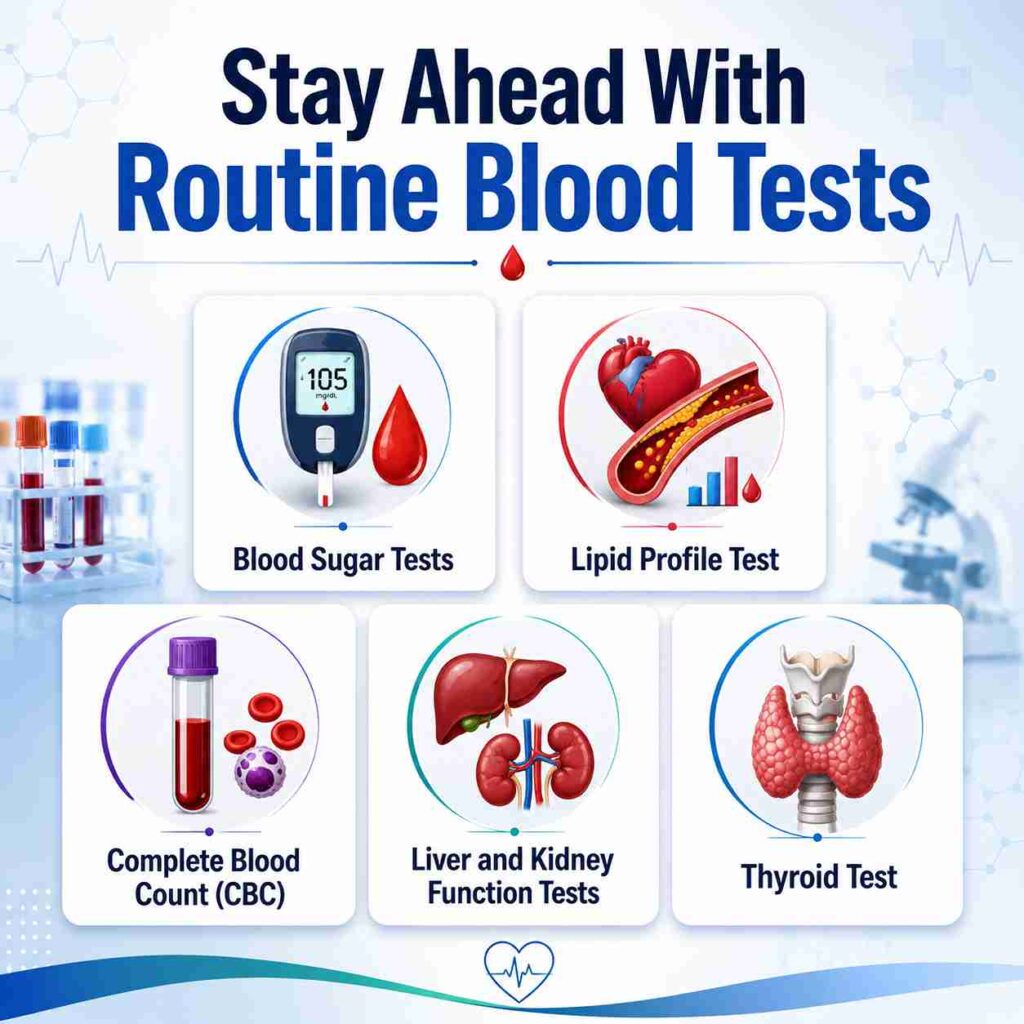
Your 30s are the ideal time to establish a baseline for preventive health with a comprehensive health screening.
Several essential blood tests may include as follows.
Blood Sugar Tests (Fasting Glucose and HbA1c)
Diabetes often develops gradually over several years. A blood sugar test measures your current glucose level, while an HbA1c test reflects your average blood sugar over approximately three months.
These tests may be recommended more frequently if you have:
- Obesity
- A family history of diabetes
- Polycystic Ovary Syndrome (PCOS)
- Had gestational diabetes
- High blood pressure
- A physically inactive lifestyle
Early detection allows lifestyle interventions before permanent complications affect the eyes, kidneys, nerves, or heart.
Lipid Profile Test for Heart Health
A lipid profile test measures cholesterol and triglyceride levels to estimate future cardiovascular risk. High cholesterol usually produces no symptoms but contributes to plaque formation inside arteries over time.
- Total cholesterol
- LDL ("bad") cholesterol
- HDL ("good") cholesterol
- Triglycerides
Results are interpreted alongside blood pressure, weight, diabetes status, smoking history, and family history.
Complete Blood Count (CBC)
A Complete Blood Count test (CBC) measures different blood cells, including red blood cells, white blood cells, and platelets. It helps identify common problems such as anaemia, certain infections, inflammation, and some blood disorders that may require further evaluation.
A CBC is particularly useful if you experience:
- Persistent fatigue
- Frequent infections
- Unexplained weakness
- Easy bruising
- Pale skin
Although a CBC cannot diagnose every condition, it often provides important clues that guide additional investigations.
Liver and Kidney Function Tests
Liver and kidney function tests evaluate whether the liver and kidneys perform essential functions, including filtering waste products, processing medications, regulating body fluids, and supporting metabolism.
Doctors may recommend these tests if you:
- Have diabetes
- Have high blood pressure
- Take long-term medications
- Are overweight
- Consume alcohol regularly
- Have symptoms suggesting liver or kidney disease
Thyroid Tests After 30: Who May Need Them?
Testing may be appropriate if you have:
- Unexplained weight changes
- Persistent tiredness
- Hair loss
- Irregular menstrual cycles
- Difficulty tolerating heat or cold
- A family history of thyroid disease
- Previous thyroid disorders
Early diagnosis allows appropriate treatment to prevent complications affecting metabolism, fertility, and overall wellbeing.
Health Check-up After 30 for Women
Routine assessments performed by women's health specialists help identify concerns early and guide appropriate screening based on individual health needs.
Women’s Preventive Health Tests to Discuss
Recommendations vary according to medical history and national screening guidelines.
- Cervical cancer screening
- Clinical breast examination
- Blood pressure monitoring
- Blood sugar assessment
- Cholesterol evaluation
- Bone health assessment in selected individuals
- Reproductive health evaluation when appropriate
Common Health Concerns Women Should Monitor
Women should seek medical advice if they notice:
- Heavy or irregular menstrual bleeding
- Pelvic pain
- Breast lumps or nipple changes
- Persistent fatigue
- Unexplained weight changes
- Symptoms of thyroid disease
- Difficulty planning pregnancy
Health Check-up After 30 for Men
Decisions you make in your 30s can significantly influence your long-term health.
Lifestyle Factors That Increase Health Risks
Sedentary habits, chronic stress, alcohol consumption, smoking, and unhealthy diets increase the risk of silent conditions such as diabetes, fatty liver disease, and cardiovascular disease.
Recommended Screening Based on Individual Risk
| Lifestyle Factor | Primary Health Risks | Recommended Screenings |
| Sedentary lifestyle & desk job | Weight gain, high BMI, insulin resistance | BMI & Waist Circumference, Fasting Blood Sugar (FBS), HbA1c |
| Chronic stress & poor diet | Hypertension, heart strain, metabolic syndrome | Lipid Profile, Blood Pressure |
| Regular alcohol consumption | Liver stress, fatty liver disease | Liver Function Test (LFT) |
| Smoking / tobacco use | Cardiovascular disease, lung problems | ECG, Chest X-ray |
| Busy, fast-paced schedule | Nutritional deficiencies, silent organ strain | CBC, Kidney Function Test (KFT), Thyroid Profile |
Should You Get a Full Body Check-up Every Year?
Yes. Annual health screening is recommended after age 30 to detect silent diseases early.
Your doctor can recommend the most appropriate full body health check-up packages based on your age, medical history, symptoms, lifestyle, and individual health risks.
When Annual Health Check-ups May Be Useful
If you:
- Have diabetes, hypertension, or high cholesterol
- Are overweight or obese
- Smoke or consume alcohol regularly
- Have a family history of chronic diseases
- Take long-term medications
- Have previously abnormal test results
- Experience ongoing health concerns
For healthy adults without significant risk factors, your doctor may suggest different screening intervals depending on your individual health profile.
Why More Tests Are Not Always Better
Excessive testing can do more harm than good.
When many tests are performed, especially for rare conditions or numerous biomarkers, false-positive results often outnumber true positives, leading to unnecessary anxiety, additional investigations, and avoidable healthcare costs.
Additional Tests Based on Your Risk Factors
Preventive health screening usually starts with comprehensive blood tests such as a CBC, LFT, KFT, lipid profile, and diabetes screening.
Depending on your age, family history, lifestyle, existing health conditions, or symptoms, your doctor may also recommend additional targeted tests to identify specific diseases at an early, more treatable stage.
If You Have a Family History of Diabetes
Your doctor may advise:
- More frequent blood sugar monitoring
- Periodic HbA1c testing
- Weight assessment
- Blood pressure monitoring
- Lifestyle counselling
If You Have Heart Disease Risk Factors
A doctor may recommend:
- Repeat cholesterol assessment
- Blood pressure monitoring
- Electrocardiogram (ECG) when indicated
- Further cardiac evaluation if symptoms are present
The purpose is to estimate cardiovascular risk and reduce the likelihood of future heart disease.
If You Are Overweight or Obese
Additional assessments may include:
- Blood sugar testing
- Cholesterol evaluation
- Liver function assessment
- Blood pressure monitoring
- Weight and waist circumference tracking
Early lifestyle interventions can significantly improve long-term health outcomes.
If You Smoke or Drink Alcohol Regularly
Your doctor may recommend:
- Liver function tests (LFTs) to assess alcohol-related liver damage.
- Blood pressure evaluation to detect hypertension linked to smoking and alcohol use.
- Cardiovascular risk assessment, including cholesterol testing and, if needed, an ECG.
- Kidney function tests (KFTs) if there are concerns about long-term health effects.
- Chest imaging or lung function tests when respiratory symptoms or significant smoking history are present.
- Additional targeted tests based on your clinical examination, medical history, and individual risk factors..
How Often Should You Get Health Tests After 30?
In your 30s, you should undergo a standard annual health checkup to detect common health conditions early.
Consider the following preventive screenings:
- Blood Pressure: Check annually, or more often if you have elevated readings or risk factors.
- Diabetes Screening (Fasting Blood Sugar / HbA1c): Every 1-3 years, depending on your risk.
- Cholesterol (Lipid Profile): Every 4-6 years if low risk; annually if high risk.
- CBC: Annually to assess overall health.
- Liver Function Tests (LFTs): Annually to monitor liver health.
- Kidney Function Tests (KFTs): Annually to assess kidney function.
- Weight & BMI: Measured at every annual checkup.
For Women
- Pap Test / HPV Test: Every 3-5 years after age 30, depending on the screening method.
- Clinical Breast Examination: Every 1-3 years.
- Pelvic Examination: Annually or as advised.
For Men
- Testicular Self-Examination: Monthly.
- PSA Test: Discuss earlier screening if you have a family history of prostate cancer.
How to Prepare Before a Health Check-up
Before visiting a diagnostic centre for your health check-up, fast for 8-12 hours (water only). Also avoid alcohol, caffeine, smoking, and intense exercise for 24 hours beforehand. Get 7-8 hours of sleep the night before, and bring your medication list and past medical records.
What Information to Share with Your Doctor
- Current medications and supplements
- Existing medical conditions
- Previous surgeries or hospitalisations
- Family history of chronic diseases
- Smoking and alcohol use
- Exercise habits
- Dietary patterns
- Recent symptoms or health concerns
Signs You Should Not Wait for a Routine Check-up
Seek medical attention if you experience:
- Chest pain
- Sudden shortness of breath
- Persistent high fever
- Blood in urine or stool
- Unexplained weight loss
- Severe or persistent abdominal pain
- Fainting episodes
- New neurological symptoms such as weakness, numbness, or difficulty speaking
Your Next Health Check Starts Here
A health check-up is not about undergoing every available investigation. It is about choosing the right tests based on your age, medical history, lifestyle, and personal risk factors.
Kasturi Medical Centre, a trusted diagnostic centre in Behala, can help you choose appropriate screening options based on your individual healthcare needs.
If you are planning your next preventive health assessment, call and book an appointment today.
People Also Ask
Is a health check-up necessary after 30 if I feel healthy?
Yes. Many conditions, including diabetes, high blood pressure, and high cholesterol, may develop without noticeable symptoms. Preventive health check-ups help detect these problems early when they are often easier to manage.
What blood tests should a 30-year-old get?
Common tests include blood sugar, HbA1c, lipid profile, complete blood count (CBC), and liver and kidney function tests. Additional investigations depend on your symptoms, medical history, and risk factors.
How often should I do a full body check-up after 30?
There is no single schedule for everyone. The frequency depends on your health status, family history, and lifestyle. A doctor can recommend the most appropriate interval based on your individual risk.
Which health problems can be detected early through routine tests?
Routine screening can help identify diabetes, high cholesterol, hypertension, anaemia, thyroid disorders, liver disease, kidney disease, and certain nutritional deficiencies before symptoms become obvious.
Are all health tests required every year after 30?
No. Most adults do not need every test annually. Screening should be personalised according to age, existing medical conditions, family history, symptoms, and lifestyle-related risk factors.