

Most families don’t choose a hospital based on advertisements. They decide based on how the hospital performs in real situations—especially during the first few hours of care.
Response time. Clarity of communication. Coordination between departments.
If you’re searching for an NABH hospital, understanding these factors can help you make a safer, more confident decision.
Kasturi Medical Centre is widely recognised as a trusted NABH hospital in South Kolkata, known for structured care systems, reliable diagnostics, and patient-focused support.
What Does a NABH Hospital Actually Offer?
A NABH-accredited hospital follows defined standards for:
- Patient safety
- Emergency preparedness
- Infection control
- Clinical protocols
- Hospital coordination systems
Why This Matters for Patients
When these systems function properly, patients experience:
- Faster admissions and reduced waiting time
- Better coordination between doctors and departments
- Clear communication at every stage
- Safer and more predictable treatment outcomes
This is what differentiates an organised hospital system from one that only looks advanced on the surface.
NABH vs Non-NABH Hospitals: What’s the Real Difference?
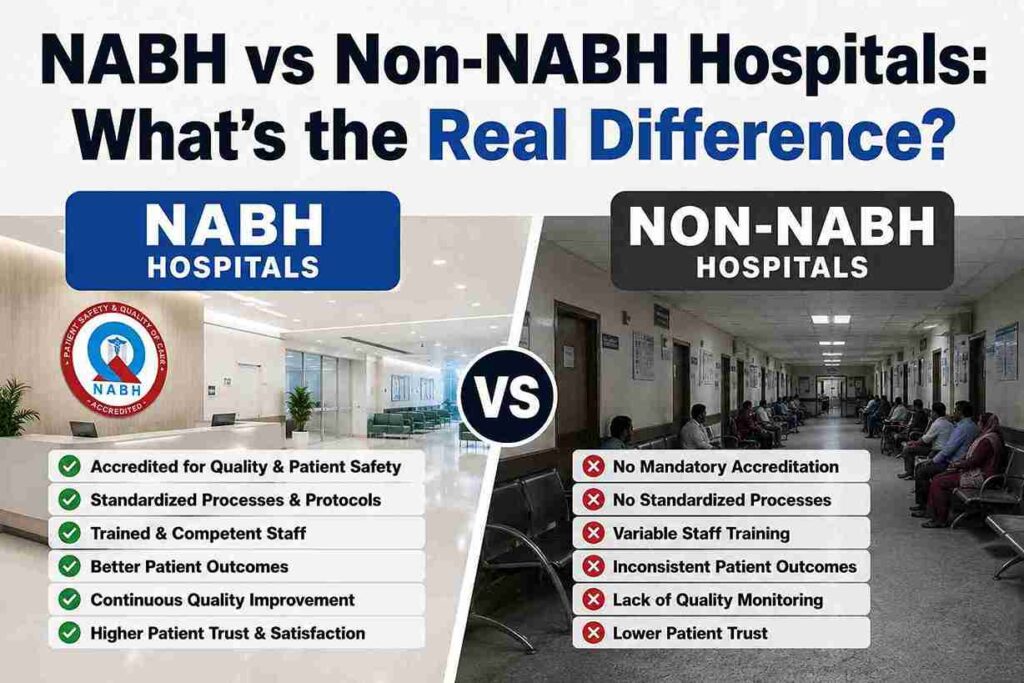
While both NABH-accredited and non-accredited hospitals may offer treatment, the difference lies in how consistently and safely that care is delivered.
Key Areas of Difference
Clinical Protocols
- NABH Hospitals: Follow standardised, documented treatment protocols
- Non-NABH Hospitals: May rely more on individual doctor practices
Patient Safety Systems
- NABH Hospitals: Strict safety guidelines, regular audits, and compliance checks
- Non-NABH Hospitals: Safety practices may vary and are less frequently audited
Infection Control
- NABH Hospitals: Defined sterilisation and infection-control processes
- Non-NABH Hospitals: May not follow structured or consistently monitored protocols
Communication & Documentation
- NABH Hospitals: Emphasis on clear documentation and patient communication
- Non-NABH Hospitals: Communication may depend on staff availability and processes
Emergency Preparedness
- NABH Hospitals: Structured emergency response systems and escalation protocols
- Non-NABH Hospitals: Preparedness levels can differ significantly
Insurance & Billing Transparency
- NABH Hospitals: More aligned with insurance requirements and standard billing formats
- Non-NABH Hospitals: May have less standardised billing and documentation
What This Means for Patients
Choosing a NABH-accredited hospital doesn’t guarantee outcomes—but it ensures that the hospital follows consistent systems, safety standards, and coordinated processes.
For families, this often translates into:
- More predictable care experience
- Reduced confusion during treatment
- Better coordination between departments
- Greater overall confidence in the system
Kasturi Medical Centre, as a recognised NABH hospital in South Kolkata, follows these structured systems to deliver safer, more organised, and patient-focused care.
Why Hospital Experience Matters More Than Infrastructure
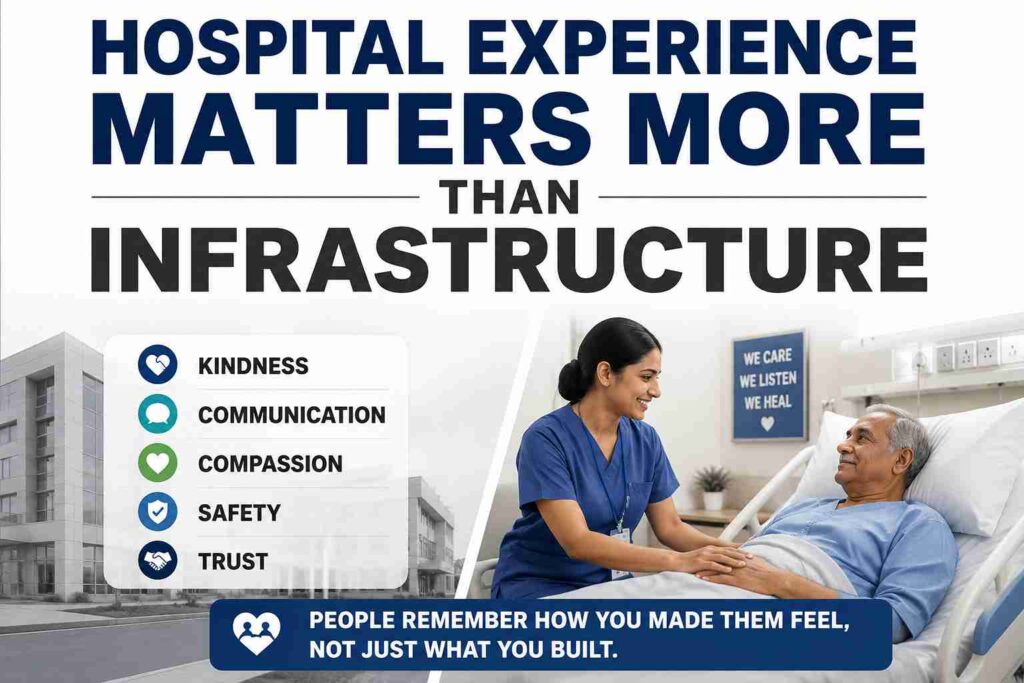
Hospitals often promote:
- Advanced medical technology
- Specialist doctors
- Modern infrastructure
But patients remember something else: How smoothly everything worked during stressful moments.
Real Situations That Shape Patient Trust
- Delayed updates during emergencies
- Repeating the same information multiple times
- Confusion between departments
- Slow diagnostic movement
- Unclear discharge instructions
These experiences define whether a hospital feels dependable.
Why the First Few Hours After Admission Are Critical
The early phase of admission often determines long-term confidence.
What Families Notice Immediately
- How quickly assistance is provided
- Whether diagnostic tests are organised efficiently
- How responsive is the nursing staff
- Whether instructions are clearly explained
One of the most common stress points is: having to repeat the same information at multiple stages. Hospitals with strong coordination systems significantly reduce this friction.
Kasturi Medical Centre, a NABH hospital in South Kolkata, focuses on streamlined admissions and coordinated care pathways, helping families feel more supported from the beginning.
Why Communication Quality Directly Impacts Patient Confidence
Patients can process medical complexity. What creates anxiety is a lack of clarity.
Common Communication Gaps
- Delayed updates
- Conflicting instructions
- Unclear timelines
- Sudden decisions without explanation
Where Communication Becomes Critical
- ICU admissions
- Surgical procedures
- Emergency observation
- Elderly patient care
- Long-term treatment plans
Clear communication leads to:
- Better understanding
- Reduced anxiety
- More confident decision-making
Kasturi Medical Centre emphasises transparent communication and guided patient support, improving overall care experience.
Why Infection Control Systems Matter Beyond Cleanliness
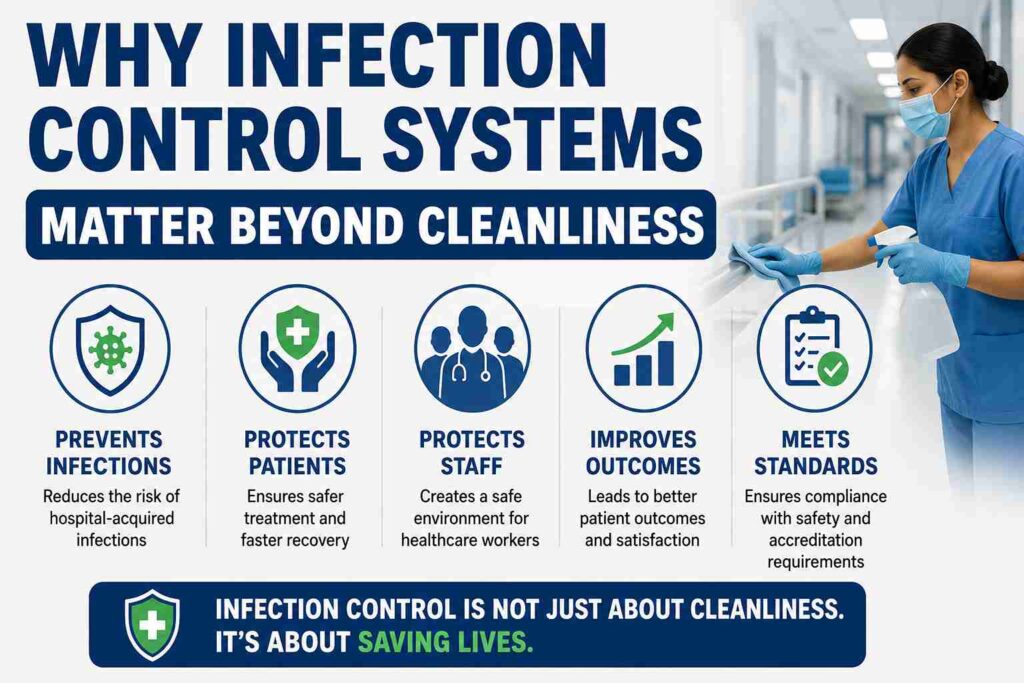
Visible cleanliness is only one part of hospital safety. The most critical processes operate behind the scenes.
Essential Infection Control Systems
- Sterilisation protocols
- ICU isolation procedures
- Biomedical waste management
- Cross-contamination prevention
- Operating theatre hygiene
- Staff compliance audits
Patients Who Require Higher Protection
- Surgical patients
- Elderly individuals
- Diabetic patients
- Newborns
- Immunocompromised patients
Consistent infection-control practices reduce complications and support safer recovery.
Why Emergency Preparedness Defines a Hospital
During emergencies, response time becomes critical. Even small delays can affect both outcomes and confidence.
What Patients Expect from a Reliable Hospital
- Rapid emergency response
- Immediate access to diagnostics
- Continuous patient monitoring
- Coordinated specialist care
- Structured escalation systems
Hospitals that manage emergencies efficiently are often perceived as more dependable.
As a leading NABH hospital in South Kolkata, Kasturi Medical Centre focuses on emergency readiness and coordinated clinical response.
Why Compassion Still Plays a Key Role in Healthcare
Beyond systems and protocols, human interaction matters.
Experiences Patients Remember
- Doctors who listen carefully
- Nurses who respond promptly
- Calm communication with elderly patients
- Clear explanations before procedures
- Respectful support for family members
These interactions reduce stress and build long-term trust.
Kasturi Medical Centre combines clinical structure with compassionate care, creating a more reassuring environment for patients and families.
How to Choose the Right NABH Hospital in South Kolkata
Before selecting a hospital, look beyond reputation.
Practical Factors to Evaluate
- Are updates shared proactively?
- Do departments communicate effectively?
- Are emergency processes smooth?
- Are elderly patients supported properly?
- Are discharge instructions clear and complete?
- Do diagnostic reports move efficiently between teams?
These indicators reflect the real performance of hospital systems.
Why Many Families Trust Kasturi Medical Centre
Patients searching for a dependable NABH hospital often choose Kasturi Medical Centre in South Kolkata because of:
- Structured and organised clinical systems
- Efficient diagnostic and reporting workflows
- Clear and consistent communication
- Reliable emergency care support
- Multidisciplinary treatment approach
This balance of system efficiency and patient-focused care helps reduce confusion and improve overall experience.
NABH Pillars of a Well-Organised Hospital System
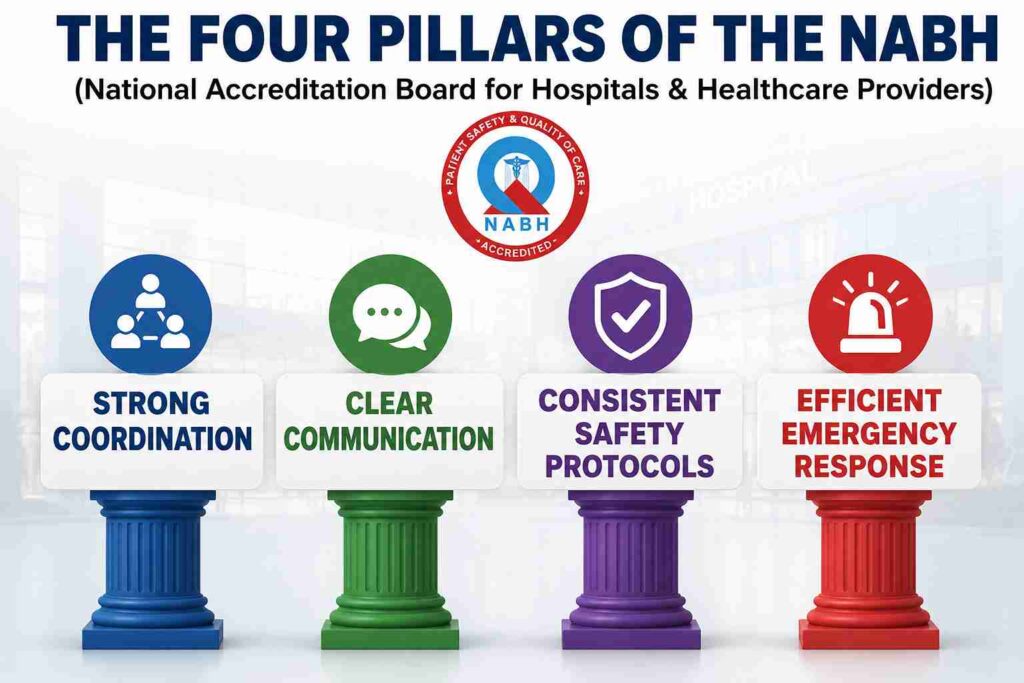
| NABH Pillar | What It Ensures | Why It Matters for Patients |
| Strong Coordination | Seamless continuity of care through integrated systems like digital health records and EMRs | Faster diagnostics, smoother admissions and discharges, reduced repetition of information |
| Clear Communication | Standardised patient communication, structured handovers, and verification of verbal instructions | Fewer medical errors, better understanding of treatment, increased patient confidence |
| Consistent Safety Protocols | Strict infection control practices, medication safety checks, and surgical verification systems | Lower risk of infections and complications, safer hospital environment |
| Efficient Emergency Response | Rapid-response teams, Code Blue systems, and real-time communication channels | Faster critical care intervention, improved chances during emergencies |
Final Takeaway
Choosing the right hospital is not just about infrastructure—it’s about how effectively care is delivered.
Kasturi Medical Centre, an NABH accredited hospital continues to support families in South Kolkata with organised care systems, dependable medical support, and a patient-first approach.
Making the right choice early can make all the difference later.
📞 Call 033 6614 1916 to schedule a consultation or learn more.
People Also Ask
Is NABH accreditation mandatory for hospitals in India?
No, NABH accreditation is not mandatory. It is a voluntary certification that hospitals choose to obtain to demonstrate adherence to quality and patient safety standards set by the Quality Council of India.
How to verify if a hospital in Kolkata is NABH accredited?
You can verify accreditation by:
- Checking the official NABH website directory
- Asking the hospital directly for certification details
- Looking for NABH certification displayed within the hospital premises
Are NABH hospitals more expensive than non-accredited hospitals?
Not necessarily. NABH accreditation focuses on quality and safety standards, not pricing. However, some accredited hospitals may have higher costs due to better infrastructure, trained staff, and compliance systems.
Do health insurance companies prefer NABH hospitals?
Yes, many insurance providers and TPAs prefer or require treatment at NABH-accredited hospitals because they follow standardised clinical and billing protocols, which improves transparency and claim processing.
How often does a hospital need to renew NABH accreditation?
NABH accreditation is valid for a limited period and requires periodic reassessment and surveillance audits to ensure continued compliance with standards.
Does NABH accreditation guarantee successful treatment outcomes?
No, accreditation ensures systems, protocols, and safety standards, but treatment outcomes can still vary based on:
- Patient condition
- Complexity of illness
- Timeliness of care
Can small hospitals or nursing homes also get NABH accreditation?
Yes, NABH offers accreditation programs not only for large hospitals but also for small healthcare organisations and nursing homes, provided they meet required standards.
What documents should patients carry when visiting a NABH hospital?
Typically, patients should bring:
- Previous medical records
- Prescriptions and reports
- ID proof
- Insurance documents (if applicable)
Is NABH accreditation the same as international hospital accreditation?
No. NABH is an Indian accreditation system, though it aligns with global quality benchmarks and is recognised internationally through affiliations like ISQua.