

Preventive care today is less about fear, more about precision. Essential screenings include blood pressure, blood sugar, lipid profile, thyroid function, and age-specific cancer tests.
Baseline checks begin in your 20s, with more focused metabolic, cardiac, and cancer screenings becoming important after 30, 40, and 50.
Timely, age-appropriate check-ups help detect silent conditions before symptoms appear.
Choosing Kasturi Medical Centre as your right diagnostic centre in Kolkata ensures accuracy, doctor guidance, and meaningful interpretation.
Today’s blog will cover exactly what you should test, when, and why.
Why preventive health checkups matter even when you feel fine

Preventive checkups detect silent conditions like diabetes, hypertension, and early organ dysfunction before symptoms appear.
Many diseases progress quietly, and early detection reduces complications, treatment costs, and long-term damage. Regular screening builds a baseline for future comparison.
How doctors decide which health tests you really need
Doctors select health tests based on an individual risk assessment. Those tests include
- Age
- Medical history
- Family history of disease
- Lifestyle factors such as diet and physical activity
- And gender-specific risks
This ensures targeted screening that identifies real health concerns while avoiding unnecessary investigations and reducing patient burden.
Age, family history, lifestyle, and sex all change your screening plan
Preventive health screening varies significantly depending on age-related risks, genetic predisposition from family history, lifestyle factors such as sedentary habits or smoking, and biological differences between men and women.
These factors help doctors decide on a more effective, age-wise health checkup plan.
Why a full body checkup should not mean unnecessary testing
A full body checkup should include only clinically relevant, evidence-based tests, rather than large panels of unnecessary investigations.
Over-testing can lead to false positives, unnecessary follow-ups, increased healthcare costs, and patient anxiety without improving actual preventive care outcomes.
What are the basic health tests almost every adult should keep track of?
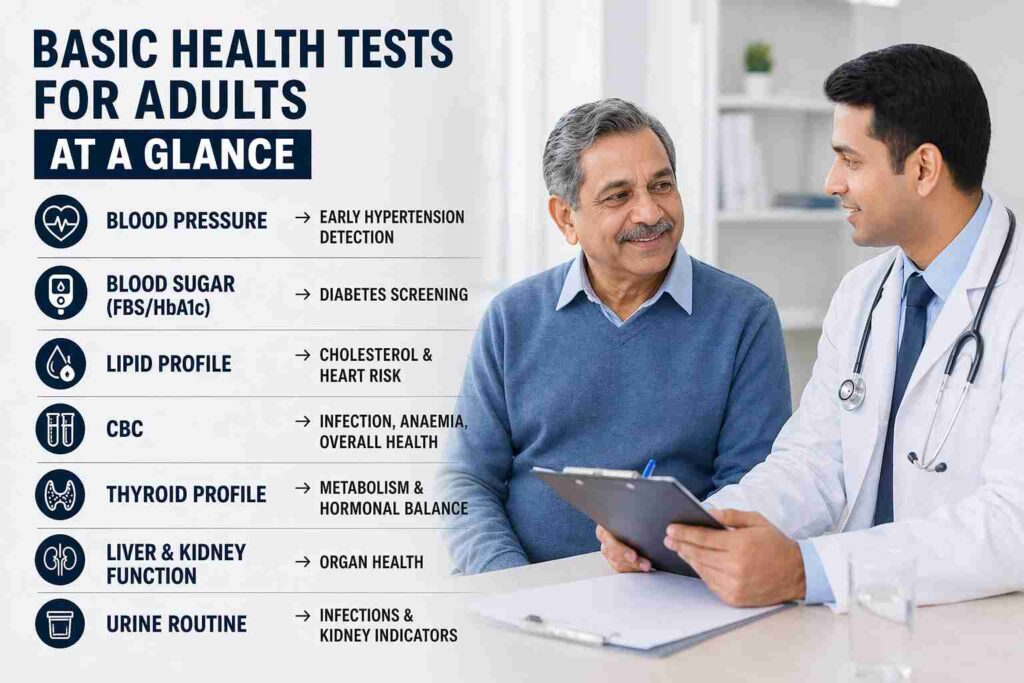
(Let’s explore further…)
Blood pressure, blood sugar, and cholesterol
Regular monitoring of blood pressure, sugar, and cholesterol is essential for early detection of hypertension, diabetes, and lipid disorders. These are key components of lifestyle disease screening and help assess cardiovascular risk before symptoms or complications develop.
CBC, thyroid, liver, kidney, and urine routine tests
A combination of CBC, thyroid profile, liver, kidney function tests, and urine analysis helps evaluate overall body function. Along with blood sugar, lipid, and thyroid tests, they help detect infections, hormonal imbalances, and early organ dysfunction before symptoms appear.
Body weight, BMI, and waist circumference
Tracking body weight, body mass index (BMI), and waist circumference helps assess obesity and metabolic risk. These simple measurements are strong indicators of future health problems and form an essential part of any routine health checkup for adults.
What health checkups should you consider in your 20s?
A preventive health checkup in your 20s helps establish a baseline for your health. They include
- Basic blood tests
- BMI assessment
- And lifestyle evaluation
Baseline tests are worth doing early
Baseline tests done early help establish a reference for your normal health parameters, making it easier to detect future changes. These help identify early metabolic risks and establish a baseline for monitoring changes as age and lifestyle factors evolve.
Women’s and men’s preventive health screening should not be ignored
For women health screening includes evaluation of menstrual health and cervical screening when indicated. Whereas, for men, preventive health screening focuses on metabolic risk and lifestyle-related conditions.
What health tests become more important after 30?
Diabetes, thyroid, liver, and heart-risk screening
After 30, these tests help identify early metabolic and cardiovascular risks, allowing timely lifestyle changes and medical intervention before complications develop.
When stress, sleep, and sedentary work start showing up in reports
Chronic stress, poor sleep, and sedentary work are showing up in health reports after 30, signalling early metabolic imbalance.
It happens due to
- Elevated blood sugar
- Abnormal lipid levels
- Liver enzyme changes
- And rising blood pressure
What preventive screenings should you prioritise after 40?
Heart health checks, metabolic screening, and eye health
After 40, heart health screening includes -
- ECG
- Lipid profile
- BP monitoring
- And diabetes screening
- Along with routine eye exams
These tests help detect cardiovascular and metabolic conditions early and prevent complications such as a heart attack or vision loss.
When cancer screening starts entering the conversation
Cancer screening becomes important after 40, including breast, cervical, and colon screening, depending on individual risk factors. These health tests help detect early-stage cancers, significantly improving treatment outcomes and survival.
What tests matter most after 50 and beyond?
Bone health, colon screening, and advanced cardiac risk checks
After 50, health screenings include
- Bone density tests
- Colon cancer screening
- And advanced cardiac evaluations
These tests help detect osteoporosis, cancer, and heart disease early, allowing timely intervention and better long-term outcomes.
Why seniors need a more personalised preventive health plan
Older adults often have multiple health conditions and medications, requiring a customised screening plan. A personalised approach ensures relevant tests are prioritised while avoiding unnecessary investigations that may not add clinical value.
This is where Kasturi Medical Centre, a reliable diagnostic centre in Kolkata, adds real value.
Which preventive health tests are different for men and women?
Preventive health tests differ for men and women due to hormonal, anatomical, and risk factor differences. Screening plans are decided to address gender-specific conditions, ensuring early detection and effective management of diseases unique to each group.
Women’s preventive health screening: breast, cervical, bone, and menopause-related checks
Women require regular screening for -
- Breast and cervical cancer
- Bone density
- And menopause-related changes
These tests help detect conditions early and effectively manage hormonal and age-related health risks.
Men’s preventive health screening: prostate, heart risk, and metabolic health
Men should undergo screening for
- Prostate health
- Cardiovascular risk
- And metabolic disorders
These tests help detect early disease and reduce long-term complications through timely intervention
How often should you get preventive health checkups?
Preventive health checkups are generally recommended annually for most adults, while some tests may be spaced out based on previous results and individual risk factors. Regular screening ensures early detection and consistent monitoring of health changes over time.
Annual tests vs tests that may be spaced out
A yearly health checkup must include -
- Blood sugar
- Lipid profile
- Thyroid function
- And basic organ tests
Imaging and specialised tests may be done less frequently depending on medical advice and risk profile.
When you need screening earlier than your age group suggests
Individuals with a family history of chronic diseases, existing symptoms, or high-risk lifestyles may need earlier or more frequent screening than standard recommendations to detect conditions at an early and manageable stage.
Which tests are commonly overdone in checkup packages?
- Whole-body CT/MRI scans without indication
- Tumor marker panels (e.g., CA-125, PSA in low-risk individuals)
- Extensive vitamin and micronutrient panels without deficiency signs
- Advanced cardiac tests (TMT, echocardiography) in low-risk people
- Hormonal panels (thyroid, cortisol, insulin) without clinical suspicion
Why do more tests not always mean better preventive care
Over-testing can result in false positives, unnecessary follow-ups, anxiety, and overtreatment. An age-specific and doctor-guided health checkup ensures meaningful results without adding unnecessary medical or financial burden.
How to choose the right preventive health checkup in Kolkata
Choosing the right checkup involves selecting a centre with accurate diagnostics, experienced doctors, and structured reporting. The focus should be on clinical relevance, proper interpretation, and continuity of care rather than just offering large test packages.
What to look for in a hospital or diagnostic centre
- NABD and NABL accreditation
- Qualified medical professionals
- Reliable laboratory standards
- Integrated care services
Why does a doctor’s review matter more than just getting a lab report
A doctor's review is essential for interpreting results correctly, correlating findings with symptoms, and guiding further treatment or lifestyle changes for effective preventive care.
Let’s Recap
Preventive health checkups should be guided by age, risk factors, and medical relevance, not generic packages. From baseline screening in your 20s to metabolic, cardiac, and cancer-focused tests after 40 and 50, each stage requires a targeted approach. Regular monitoring of core parameters, such as blood sugar, lipids, thyroid function, and organ function, helps detect disease early.
Choosing Kasturi Medical Centre, a superspeciality diagnostic centre in Kolkata, ensures accurate testing, doctor-led interpretation, and meaningful preventive care outcomes.
Book an appointment today.
People also ask
What does a preventive health checkup include?
It includes basic blood tests, organ function tests, metabolic screening, and vital measurements tailored to age and risk factors.
Which tests should be done every year?
Blood sugar, lipid profile, blood pressure, CBC, and thyroid function are commonly repeated annually.
At what age should one start regular health screening?
Screening can begin in your 20s with baseline tests and become more structured after 30.
Is a full body checkup necessary every year?
Not always. Testing should be personalised rather than repeated blindly every year.