

Many cancers develop silently before noticeable symptoms appear. By the time warning signs become obvious, medical care may become more complicated. This is why age-based cancer screening plays an important role in preventive healthcare and early detection.
Kasturi Medical Centre, a reliable NABH-accredited diagnostic centre in Behala, continues to support families across South Kolkata through organised screening evaluations, coordinated diagnostic services, and patient-focused healthcare support.
The purpose of preventive cancer screening is to help identify abnormal changes earlier and support more informed healthcare decisions before symptoms begin affecting daily life.
In this blog, we explain cancer screening by age, including when breast, cervical and colorectal screening tests are commonly recommended as part of routine preventive healthcare.
Why Cancer Screening Matters Before Symptoms Appear

Cancer screening helps detect abnormal changes before a condition progresses. Screening involves testing healthy individuals to identify those who may have early-stage disease before symptoms become noticeable [Source].
Many people postpone routine health monitoring because of work, caregiving responsibilities or the assumption that feeling healthy means testing can wait. However, several cancers may progress quietly during early stages.
Factors That Influence Cancer Screening Recommendations
Cancer screening is not the same for everyone. Doctors tailor recommendations based on a combination of individual risk factors and overall health profile.
They may consider:
- Age – Risk for certain cancers increases with age
- Family medical history – Genetic patterns may influence susceptibility
- Lifestyle habits – Factors such as diet, physical activity, smoking, and alcohol use
- Personal medical background – Existing conditions or past health issues
- Known risk factors – including hormonal, environmental, or occupational exposure
- Previous abnormal findings – Earlier test results may require closer monitoring
These factors help determine whether someone may benefit from earlier, more frequent, or more targeted screening evaluations.
Why Doctors Recommend Earlier Screening
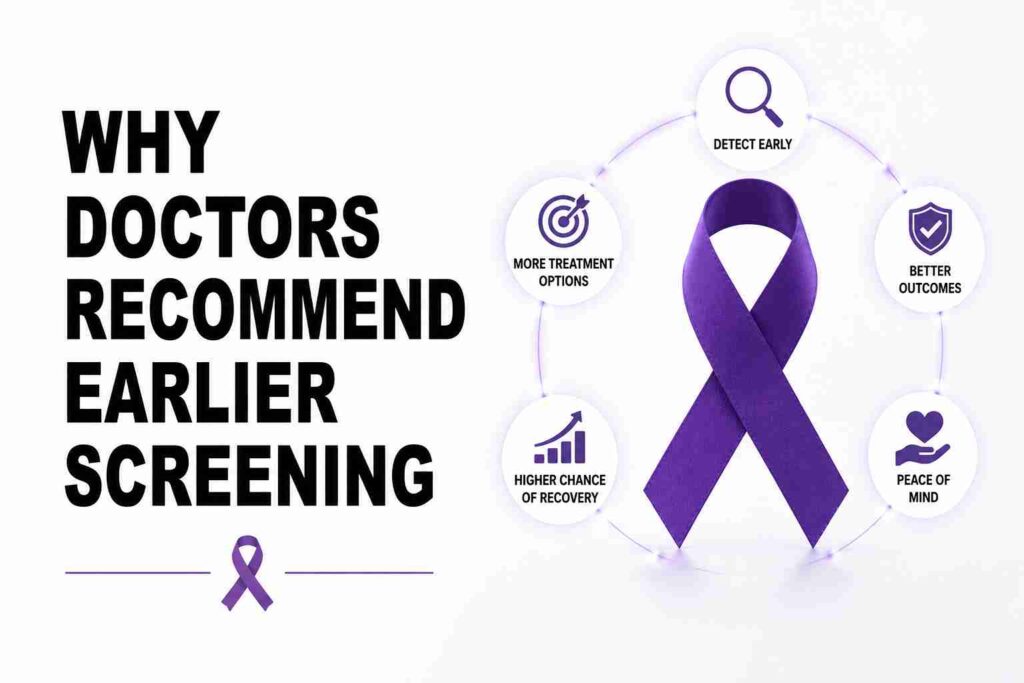
Doctors often encourage preventive cancer screening because certain abnormalities can develop silently for years before physical symptoms appear.
Earlier cancer detection may support:
- Better medical planning
- Timely treatment decisions
- Improved monitoring opportunities
- More proactive healthcare management
Breast Cancer Screening by Age
Breast cancer remains one of the most discussed health concerns among women in India. Awareness around younger-age diagnosis trends has also increased significantly in recent years.
Many women assume breast evaluations become necessary only after visible symptoms appear. However, some breast tissue changes may develop long before physical discomfort or noticeable abnormalities occur.
Common Breast Health Evaluations
- Clinical breast examination
- Mammogram screening
- Imaging-based breast assessments
- Doctor-guided follow-up evaluations
Breast Cancer Screening Guidance by Age
| Age Group | Recommended Screening Discussion |
| 20s | Breast awareness and routine health discussions |
| 30–39 | Periodic medical evaluations may be advised |
| 40+ | Mammogram screening discussions become more important |
| 50+ | Continued imaging and routine monitoring are often recommended |
When Does Breast Screening Become More Important?
Breast screening becomes more important around age 40, when routine mammography is commonly recommended as part of preventive care.
However, some women may need to start earlier.
Earlier screening may be advised if you have:
- A strong family history of breast cancer
- Known genetic risk factors
- Previous abnormal breast findings
- Ongoing or unexplained breast-related symptoms
If you fall into any of these categories, it’s important to speak with a doctor about starting screening sooner.
Kasturi Medical Centre, a NABL-accredited diagnostic centre in Behala, helps women stay on track with regular breast screening through reliable, accessible, and patient-focused care.
Cervical Cancer Screening by Age
Certain cervical abnormalities may develop gradually without causing obvious symptoms during the early stages. This is why preventive cervical evaluations are often recommended before symptoms begin affecting daily life.
Common Cervical Health Evaluations
- Pap smear screening
- HPV test
- Follow-up cervical assessments
- Doctor-guided monitoring
Cervical Screening Guidance by Age
| Age Group | Typical Preventive Screening Guidance |
| 21–29 | Pap smear discussions may begin based on medical guidance |
| 30–65 | Pap smear and HPV screening become more commonly recommended |
| Above 65 | Screening decisions may depend on previous reports and medical advice |
Why Are Cervical Evaluations Important Without Symptoms?
Colorectal cancer screening is becoming increasingly important in India as awareness around digestive health continues to grow.
Many people still assume screening is only needed after symptoms appear. However, this delay can be risky.
At Kasturi Medical Centre, as a recognised NABH-accredited diagnostic centre in Behala, doctors always encourage earlier, preventive discussions around colon health—especially after midlife or in individuals with higher risk factors.
When Should Colorectal Screening Begin?
Colorectal cancer screening is typically recommended after age 45 as part of preventive healthcare.
Colorectal Screening Guidance by Age
| Age Group | Common Preventive Screening Trend |
| Below 45 | Typically based on individual risk assessment |
| 45–50 | Preventive screening discussions become more common |
| 50+ | Regular colorectal monitoring may be advised |
Common Colorectal Evaluations
Depending on individual risk factors and medical guidance, colorectal screening may include:
- Stool-based screening tests
- Colonoscopy screening
- Follow-up diagnostic procedures
- Doctor-guided digestive health monitoring
Who May Need Earlier Cancer Screening?
| Risk Factor | Why an Earlier Review May Be Considered |
| Strong family medical history | Certain cancers may carry a hereditary risk |
| Previous abnormal findings | Closer observation and follow-up may become necessary |
| Long-term lifestyle-related risks | Doctors may advise earlier preventive monitoring |
| Persistent unexplained symptoms | Additional diagnostic evaluation may be recommended |
If you have digestive concerns, past abnormal findings, or a family history of risk factors, Kasturi Medical Centre, a trustworthy NABH-accredited diagnostic centre in Behala, offers personalised screening support to help you stay proactive about your health.
Why Preventive Testing Often Gets Delayed
- Busy work and caregiving responsibilities
- Assuming they are too young
- Lack of visible symptoms
- Fear or uncertainty around testing
- Delaying routine health checkups
As many cancers develop gradually, the absence of symptoms does not always mean the absence of risk. Preventive screening often provides an important opportunity for earlier awareness and timely medical guidance.
When To Speak to a Cancer Doctor?

You should consider speaking to a doctor about cancer screening if you have reached the recommended age for routine tests, have known risk factors such as a strong family history, or are experiencing persistent, unexplained symptoms.
Routine screening is designed for individuals without symptoms to help detect cancer early. In contrast, diagnostic tests are used when symptoms are already present and require further medical evaluation.
Why Accessible Screening Support Matters
People are more likely to prioritise preventive healthcare when medical support feels accessible, well-organised, and easy to integrate into everyday life.
Patients Often Look For:
- Professional medical guidance
- Clear and transparent communication
- Structured and organised evaluation pathways
- Reliable and timely reporting systems
- Coordinated follow-up and continuity of care
Well-structured diagnostic support helps reduce confusion, improves clarity at every stage, and ensures smoother coordination between screening, reporting, and medical follow-up.
Final Takeaway
People rarely regret prioritising their health earlier. More often, they regret postponing it for too long.
Understanding cancer screening guidelines by age can help individuals make calmer, more informed healthcare decisions before symptoms begin disrupting everyday life.
To schedule a preventive health evaluation, 📞 call 033 6614 1916 today.
People Also Ask
Can cancer screening detect problems before symptoms appear?
Yes. Many breast, cervical and colorectal abnormalities develop silently during early stages. Preventive screening helps doctors identify unusual changes before noticeable symptoms begin affecting daily life.
Why are mammograms commonly recommended after the age of 40?
Breast tissue changes and age-related risk patterns become more clinically significant after 40. This is why many healthcare providers encourage more structured discussions about mammogram screening during this stage of life.
Does family medical history affect cancer screening timelines?
Yes. Individuals with inherited risk factors, previous abnormal findings or stronger family history may benefit from earlier or more personalised screening schedules guided by medical advice.
Which tests are commonly used for cervical cancer screening?
Pap smear screening, HPV testing and follow-up cervical evaluations are among the most commonly recommended methods used to monitor cervical health and identify abnormal cellular changes.
Why are colorectal screening discussions increasing among younger adults?
Growing digestive-health awareness, changing lifestyle patterns, and increased focus on preventive healthcare are encouraging more people to discuss colon and colorectal health earlier than before.