
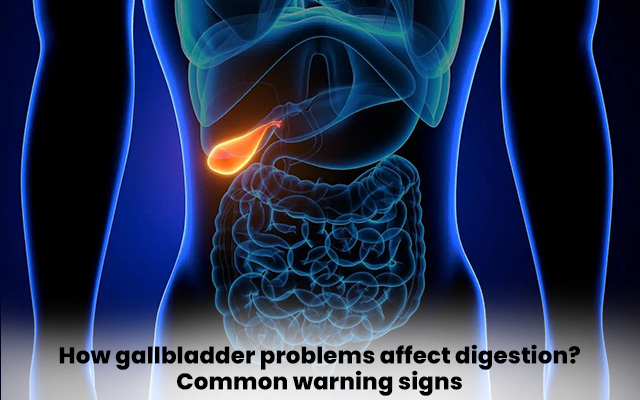
Your gallbladder stores bile and releases it when you eat — especially fatty foods. When it stops working properly, fat digestion breaks down, and symptoms follow.
Many people live with bloating, nausea, or upper abdominal discomfort for months without ever connecting it to their gallbladder. This blog explains exactly how gallbladder problems affect digestion and what warning signs you should not ignore.
"Gallbladder disease can sneak up on you. By the time you have symptoms, it may already be serious. Don't wait for the intense alarm symptoms of acute cholecystitis." — Cleveland Clinic Gastroenterology Team
What the Gallbladder Actually Does During Digestion
To understand how gallbladder problems affect digestion, you first need to understand bile.
Bile is a greenish-yellow fluid produced continuously by your liver. It contains bile salts, cholesterol, bilirubin, and water. Its primary job is to break down dietary fats so your small intestine can absorb them. Without bile, fat digestion becomes inefficient — and fat-soluble vitamins (A, D, E, and K) cannot be absorbed properly either.
Here's the normal sequence:
- You eat a meal — especially one with fat.
- Your small intestine sends a hormonal signal (cholecystokinin) to the gallbladder.
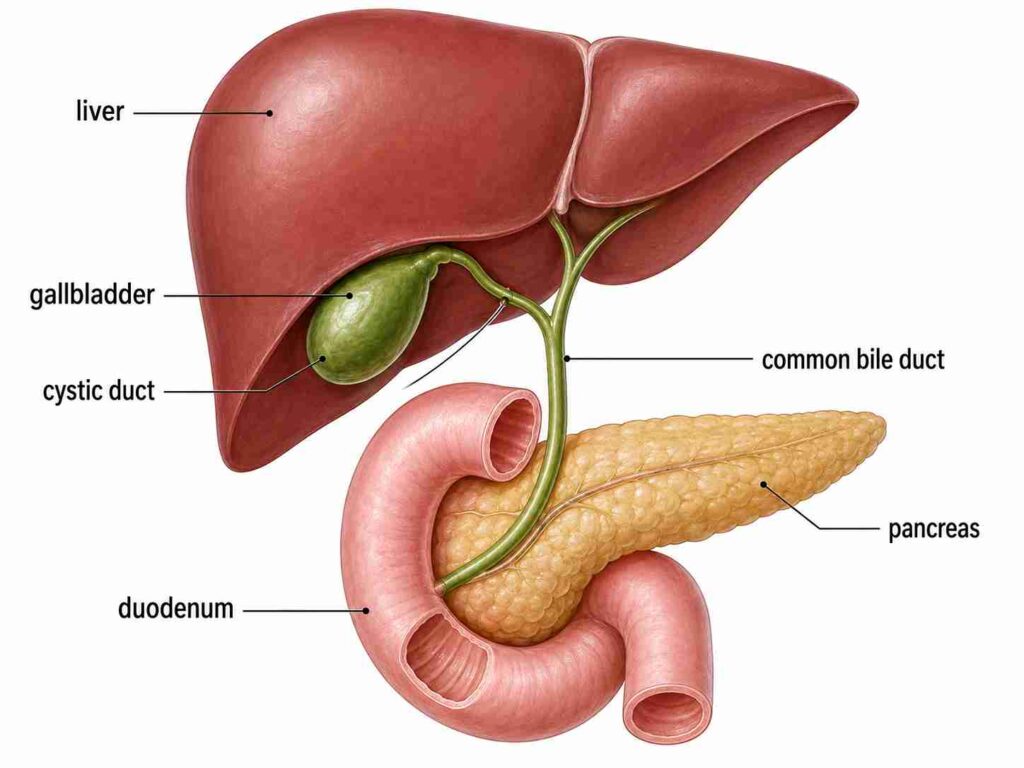
- The gallbladder contracts and releases stored, concentrated bile through the bile duct.
- Bile enters the small intestine and emulsifies fat — breaking large fat globules into smaller droplets.
- Digestive enzymes from the pancreas then break these droplets down further for absorption.
When the gallbladder is diseased — inflamed, blocked by stones, or simply not contracting properly — this whole sequence is disrupted. The result is impaired fat digestion, which causes a cascade of digestive symptoms.
The Most Common Gallbladder Problems
Not all gallbladder problems are the same. Here's a quick overview:
| Condition | What Happens | Common Cause |
|---|---|---|
| Gallstones (Cholelithiasis) | Solid deposits form inside the gallbladder | Excess cholesterol or bilirubin in bile |
| Cholecystitis | Gallbladder becomes inflamed, often from a blocked stone | Gallstones lodging in the gallbladder neck |
| Biliary Dyskinesia | Gallbladder doesn't contract properly despite no stones | Motility disorder |
| Choledocholithiasis | Gallstone moves into the common bile duct | Stone migration from gallbladder |
| Gallbladder Polyps | Small growths on the gallbladder wall | Cholesterol deposits or tissue overgrowth |
Among these, gallstones are by far the most common. Risk increases with age, female sex, obesity, diabetes, family history, and a high-fat diet.
How Gallbladder Problems Directly Affect Digestion
1. Fat Digestion Becomes Impaired
This is the most direct effect. When bile can't flow freely — due to a blocked duct or an inflamed gallbladder that won't contract — fat passes through the digestive tract largely undigested. This causes:
- Greasy, pale, or floating stools (steatorrhea) — undigested fat in stool
- Diarrhoea after fatty meals — the gut tries to push fat through quickly
- Feeling full or heavy after eating — even small portions of fat feel difficult to digest
2. Fat-Soluble Vitamins Are Poorly Absorbed
Vitamins A, D, E, and K all need bile to be absorbed. Chronic gallbladder disease over months or years can lead to subtle deficiencies — affecting night vision (Vitamin A), bone density (Vitamin D), immunity, and clotting (Vitamin K).
3. Bile Backs Up Into the Blood
When a stone blocks the bile duct, bile stops flowing to the intestine and starts accumulating in the bloodstream. This causes:
- Jaundice — yellowing of the skin and whites of the eyes
- Dark urine — excess bilirubin excreted through the kidneys
- Pale or clay-coloured stools — absence of bilirubin in the gut
This is a sign of a blocked bile duct, which is a medical emergency.
4. Digestive Discomfort After Every Meal
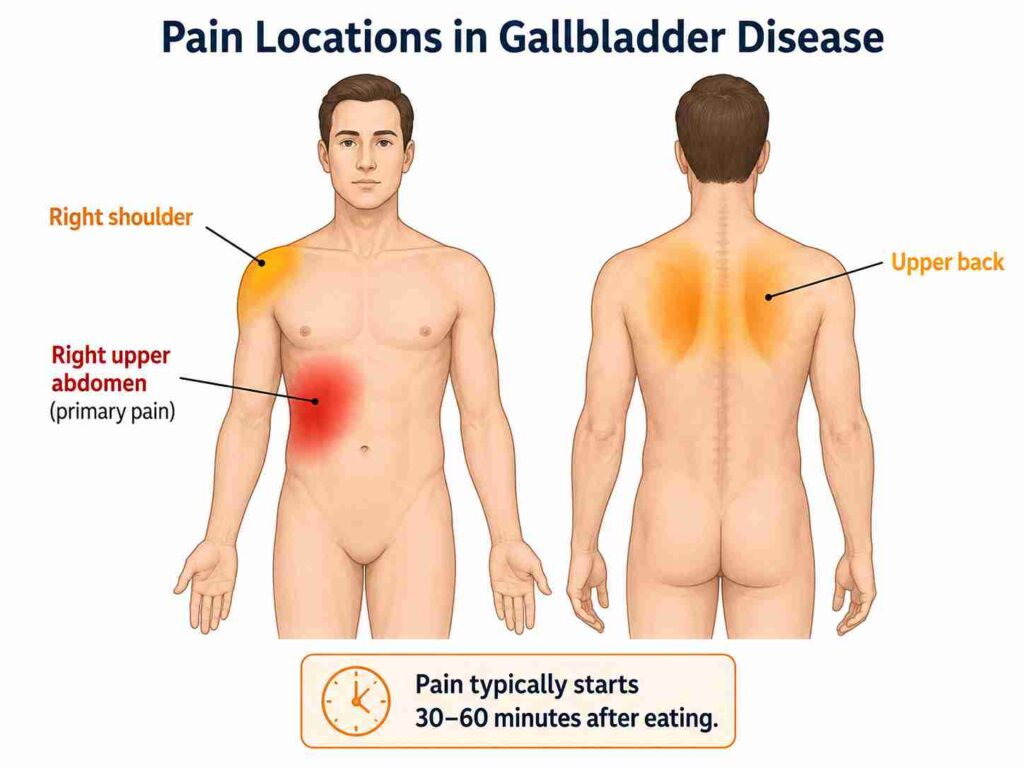
Because the gallbladder is triggered by eating (especially fat), gallbladder problems create a very recognizable pattern: symptoms that begin or worsen 30–60 minutes after eating. This pattern distinguishes gallbladder-related digestive issues from many other conditions.
5. Pancreatitis Risk
The bile duct and the pancreatic duct share a common exit point into the small intestine. If a gallstone travels down and blocks this junction, digestive enzymes get trapped inside the pancreas — causing gallstone pancreatitis, a potentially life-threatening condition. This requires urgent medical attention.
If you're experiencing ongoing digestive issues, our Gastroenterology Department at Kasturi Medical Centre provides comprehensive evaluation and treatment for gallbladder and digestive disorders.
Warning Signs of Gallbladder Problems
The tricky part about gallbladder disease is that it mimics many other conditions — heartburn, acid reflux, irritable bowel syndrome, or even a pulled muscle. Here are the signs that point specifically toward the gallbladder.
The Classic Sign: Biliary Colic (Gallbladder Attack)
This is the most telling symptom. A biliary colic is a sudden, intense pain in the upper right abdomen, just below the ribcage. It typically:
- Starts 30–60 minutes after eating fatty or fried food
- Lasts anywhere from 30 minutes to several hours
- May radiate to the right shoulder blade or upper back
- Comes and goes but returns with subsequent fatty meals
"While pain and sweating are common with gallstone attacks, symptoms like fever, jaundice, and chalky stool can signal something more serious and need to be addressed immediately." — Dr. Klil Babin, MD, General Surgeon, Atlantic Health
Many people mistake this pain for heartburn or gas. The key difference: gallbladder pain is location-specific (right upper abdomen), often more intense, and clearly triggered by fatty meals.
Complete List of Warning Signs
| Warning Sign | What It Means | Urgency |
|---|---|---|
| Upper right abdominal pain after meals | Gallbladder contracting against a blockage | Moderate — see a doctor |
| Nausea/vomiting after fatty food | Bile not releasing properly | Moderate |
| Bloating and indigestion | Impaired fat processing | Mild to moderate |
| Pain radiating to right shoulder or back | Gallbladder spasm or inflammation | Moderate |
| Fever with abdominal pain | Possible cholecystitis (infection) | Urgent — seek care now |
| Jaundice (yellow skin/eyes) | Blocked bile duct | Urgent — seek care now |
| Dark urine | Bilirubin in blood from blocked duct | Urgent — seek care now |
| Clay/pale-coloured stools | No bile reaching the intestine | Urgent — seek care now |
| Persistent pain >6 hours | Acute cholecystitis | Go to emergency |
Symptoms That Get Misdiagnosed
Because gallbladder symptoms overlap with so many other conditions, misdiagnosis is common. Here's how to tell the difference:
Gallbladder vs Acid Reflux/GERD: Acid reflux causes burning in the chest and throat. Gallbladder pain is a deeper, more intense ache in the right side, not the centre of the chest.
Gallbladder vs Irritable Bowel Syndrome (IBS): IBS-related discomfort is often around the lower abdomen and linked to bowel habits. Gallbladder pain is upper right, post-meal, and unrelated to bowel changes until the disease is advanced.
Gallbladder vs Heart Attack: This one is serious. Gallbladder pain can occasionally radiate into the chest and left shoulder, mimicking a cardiac event. If there's any doubt — especially with sweating, breathlessness, or left-sided pain — seek emergency care immediately and don't assume it's the gallbladder.
Our General Surgery team works alongside gastroenterology specialists to ensure accurate diagnosis before any treatment decisions are made.
Who Is at Higher Risk?
Gallbladder disease doesn't affect everyone equally. The following factors significantly raise your risk:
- Women — Female hormones (estrogen) increase cholesterol in bile. Risk is higher during pregnancy, while on birth control pills, or on hormone replacement therapy.
- Age above 40 — Risk increases substantially after 40 years.
- Obesity — Higher body weight is directly linked to excess cholesterol in bile.
- Rapid weight loss — Losing weight too quickly triggers the liver to release more cholesterol into bile.
- Diabetes — High triglyceride levels common in diabetes promote stone formation.
- Family history — Genetics affect bile composition and gallbladder motility.
- Sedentary lifestyle — Physical inactivity slows down gallbladder emptying.
How Gallbladder Disease Is Diagnosed
If you have persistent digestive symptoms, your doctor will typically begin with:
Ultrasound of the abdomen — The first-line test. Highly accurate in detecting gallstones and gallbladder wall thickening (a sign of inflammation). Non-invasive and widely available.
Blood tests — Liver function tests (LFTs) and a complete blood count can detect elevated bilirubin, liver enzymes, or signs of infection.
HIDA Scan — Measures how well the gallbladder contracts. Useful when symptoms are present but no stones are found (biliary dyskinesia).
CT Scan or MRI (MRCP) — Used when a blocked bile duct or complication is suspected.
An endoscopy may also be recommended to rule out other causes of upper abdominal symptoms. Kasturi Medical Centre provides both ultrasound and endoscopy services at our diagnostic centre in Behala.
Treatment Options
Treatment depends on the severity of your condition:
Watchful waiting — For silent gallstones (no symptoms), monitoring without treatment is often appropriate.
Dietary management — A low-fat, high-fibre diet can reduce the frequency of attacks. This doesn't cure gallstones but helps manage symptoms.
Medication (Ursodeoxycholic acid) — Can dissolve small cholesterol stones, but works slowly (months to years) and stones often return after stopping.
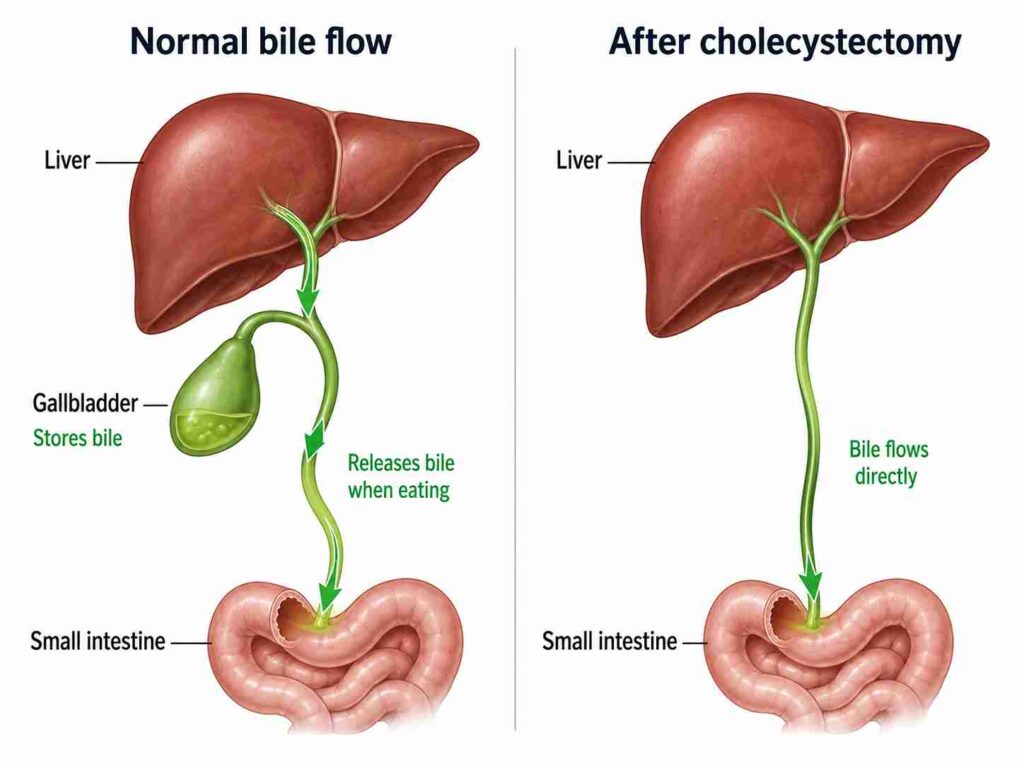
Laparoscopic Cholecystectomy — The gold-standard surgical treatment. The gallbladder is removed through small incisions using a camera. Most patients go home the same day and return to normal activity within 1–2 weeks. The liver continues making bile and redirects it directly to the small intestine — digestion continues normally for the vast majority of patients.
Kasturi Medical Centre's Gallbladder Surgery department offers minimally invasive laparoscopic cholecystectomy with experienced surgeons and full post-operative support.
What Happens After Gallbladder Removal?
A common concern: "Can I digest food normally without a gallbladder?"
Yes — for most people, digestion continues well after removal. Without the gallbladder, bile drips continuously (in small amounts) from the liver into the small intestine rather than being stored and released in bursts. Most people adapt within a few weeks.
Some people experience loose stools or diarrhoea after fatty meals in the first 1–3 months. This usually settles down. A high-fibre, moderate-fat diet during the recovery period helps significantly.
When to See a Doctor Immediately
Do not wait if you have:
- Severe upper right abdominal pain lasting more than 6 hours
- Fever above 38°C along with abdominal pain
- Yellow skin or yellow eyes
- Dark, tea-coloured urine
- Pale, chalky, or grey stools
- Vomiting that doesn't stop
These are signs of acute cholecystitis, a blocked bile duct, or gallstone pancreatitis — all of which require urgent medical evaluation.
If you're experiencing milder but persistent symptoms — recurring bloating, nausea after meals, or unexplained upper abdominal discomfort — book an appointment with a gastroenterologist before symptoms escalate.
Key Takeaways
- The gallbladder plays a critical role in fat digestion by releasing bile when you eat.
- When it's diseased, fat digestion is impaired — causing greasy stools, bloating, nausea, and abdominal pain.
- The most recognizable sign is upper right abdominal pain 30–60 minutes after a fatty meal.
- Fever, jaundice, dark urine, and pale stools are emergency warning signs — do not ignore them.
- Gallstones affect 1 in 20 people globally; the condition is common and highly treatable.
- Laparoscopic surgery removes the gallbladder safely and restores normal digestion for most patients.
External Resources
For further reading from trusted medical sources:
- Harvard Health Publishing — The Humble Gallbladder — Overview of gallbladder disease, complications, and why the organ matters more than most people think.
- Cleveland Clinic — Gallbladder Disease — Detailed breakdown of types, risk factors, diagnosis, and when surgery is needed.
- PubMed / Annals of Medicine — Global Prevalence of Gallbladder Stones (2025 Meta-Analysis) — Peer-reviewed data on how common gallstones are worldwide and who is most at risk.