

Our kidneys filter waste and excess fluid from the blood every day. When they stop working properly, dialysis becomes essential. But the link between kidney health and dialysis goes both ways, and this guide explains how.
Why is dialysis needed?
Dialysis is a life-saving treatment used when the kidneys can no longer do their job. When they fail, toxins, waste and excess fluid build up in the body. This can cause:
- High blood pressure
- Swelling in the legs, feet or face
- Fatigue and weakness
- Shortness of breath
- Nausea, poor appetite and itching
- Dangerous potassium levels that can affect the heart
Without dialysis, these can damage other organs and become life-threatening.
CKD stages and when dialysis enters the picture
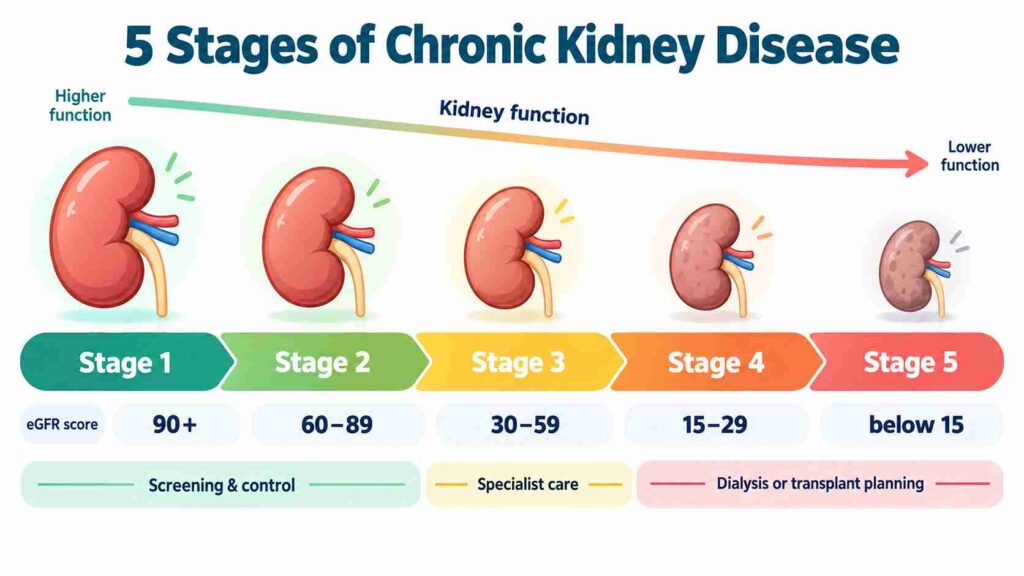
Your nephrologist decides on dialysis using symptoms and test results, not one number alone.
| Stage | eGFR (mL/min/1.73 m²) | What it means | Typical care |
| 1 | 90 or above | Normal filtering, with signs of kidney damage | Control sugar and BP, yearly screening |
| 2 | 60–89 | Mildly reduced | Risk-factor management, monitoring |
| 3a / 3b | 45–59 / 30–44 | Moderately reduced | Specialist care, medication review, diet |
| 4 | 15–29 | Severely reduced | Planning for dialysis or transplant |
| 5 | Below 15 | Kidney failure | Dialysis or transplant |
Warning signs to see a nephrologist
• Foamy or bloody urine
• Swelling of feet, ankles or face
• Needing to urinate more often at night
• Unexplained tiredness or itching
• Blood pressure that is hard to control
• Diabetes or hypertension with no kidney tests in the last year
How does dialysis support the body?
Dialysis acts as an artificial kidney and does the work your kidneys can no longer handle:
- Removing waste and toxins: It clears harmful substances from the blood.
- Balancing electrolytes: It keeps potassium, sodium and calcium at safe levels, which matters for muscles, nerves and heart rhythm.
- Removing excess fluid: Taking out extra fluid and salt makes blood pressure easier to manage and eases strain on the heart.
- Relieving symptoms: Many patients feel less nausea, swelling and breathlessness once toxins and fluid are under control.
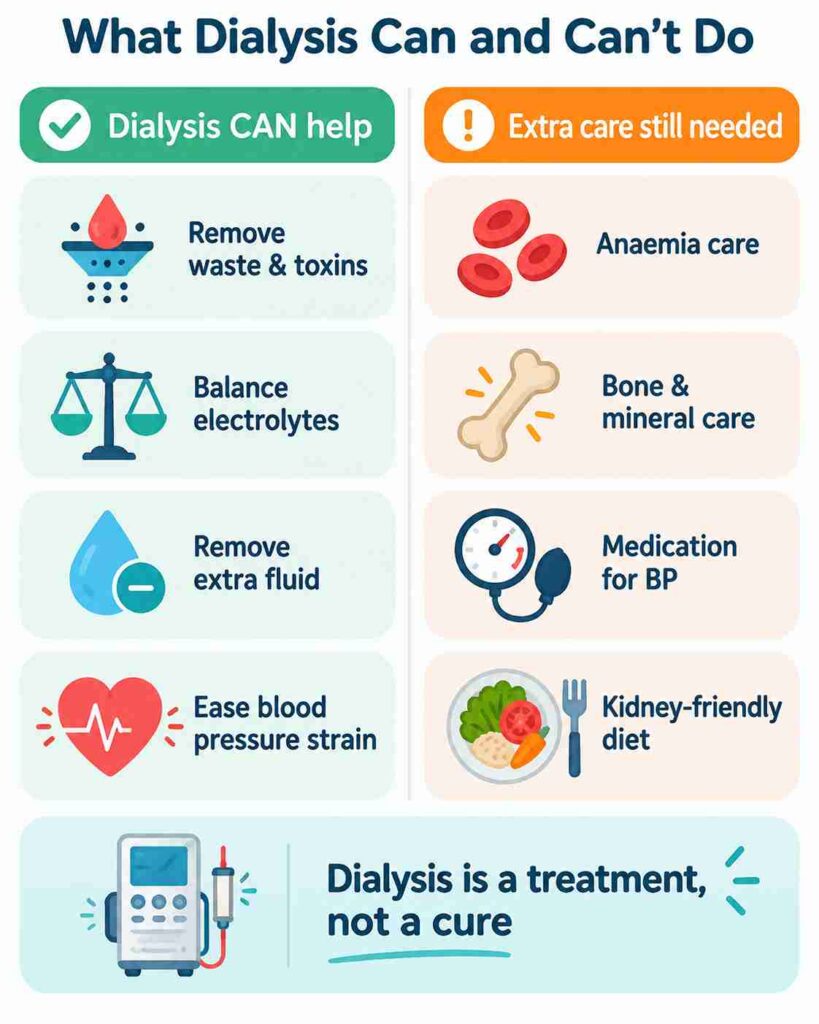
Healthy kidneys also make hormones, help build red blood cells and support bone health. Dialysis doesn't fully replace these roles, so patients often need extra treatment:
| Kidney function | Effect when lost | Usual support alongside dialysis |
| Red blood cell hormone (EPO) | Anaemia, tiredness | Anaemia medication, iron |
| Vitamin D and mineral balance | Weak bones, high phosphorus | Phosphate binders, vitamin D, diet |
| Blood pressure control | Hypertension | BP medication, fluid limits |
| Acid balance | Acid build-up | Adequate dialysis, medication |
Kidney failure also puts extra strain on the heart, so regular blood pressure, fluid and heart checks are part of good dialysis care.
Types of dialysis
| Factor | Hemodialysis | Peritoneal dialysis |
| How it works | A machine filters blood outside the body | Fluid placed in the abdomen absorbs waste, then is drained |
| Where | Usually at a dialysis centre | Usually at home |
| Frequency | Typically three times a week | Usually daily exchanges |
| Access | Fistula, graft or catheter | Abdominal catheter |
| Flexibility | Fixed schedule with supervised care | More flexibility, needs training and hygiene |
Neither is better for everyone. The right choice depends on your health, home setup, lifestyle and preferences.
Why a proper dialysis routine matters
Skipping sessions lets toxins and fluid build up. This can cause shortness of breath, dangerous potassium levels and heart problems. To get the most from treatment:
- Attend every session and don't shorten it without medical advice
- Take medicines as prescribed
- Keep to your daily fluid allowance
- Have regular blood tests and check-ups
- Report cramps, dizziness, fever or redness at your access site right away
Kidney-friendly dialysis diet
General guidance only. A renal dietitian should personalise it.
| Nutrient | Why it matters | General tips |
| Salt (sodium) | Causes thirst, swelling and high BP | Cut pickles, papad, chips and packaged foods |
| Potassium | High levels can affect heart rhythm | Limit high-potassium foods as advised |
| Phosphorus | Weakens bones and vessels over time | Limit processed foods; take binders if prescribed |
| Fluids | Excess fluid strains heart and lungs | Stay within your daily limit |
| Protein | Needs often increase on dialysis | Include enough protein as your dietitian advises |
Conclusion
Kidney disease can lead to the need for dialysis, and dialysis then supports the body by removing waste, balancing electrolytes and controlling fluid. It works best with regular sessions, a kidney-friendly diet, medication and follow-up care.
If you or a loved one has kidney concerns, consult the experts at Kasturi Medical Centre, one of the best dialysis centre in Behala, for kidney care and dialysis support. Book an appointment - Call: +918336925809
** This article is for general information and isn't a substitute for medical advice.
Frequently asked questions
Can kidney disease be reversed?
Chronic kidney disease usually can't be reversed, but early treatment can slow it. Sudden kidney injury may recover once the cause is treated.
When do I need dialysis?
Usually when kidney function falls very low (around stage 5), or earlier if fluid overload, high potassium or severe symptoms can't be controlled. Your nephrologist decides.
Does dialysis damage the kidneys?
No. Dialysis replaces lost function and doesn't cause kidney failure. Sudden blood pressure drops during sessions can affect any remaining kidney function, which is why monitoring matters.
Is dialysis permanent?
For chronic kidney failure it is usually long-term unless you receive a transplant. For sudden kidney injury it may be temporary.
Is dialysis painful?
Needle insertion for hemodialysis can pinch. The session itself is generally not painful, though cramps, tiredness or low blood pressure can occur.
Can I work and travel on dialysis?
Many people do with planning. Schedule sessions around your routine and arrange dialysis at your destination in advance.
How long can a person live on dialysis?
It varies widely with age, other conditions and how well the treatment plan is followed. Your nephrologist can give you a personal outlook.
Dialysis or kidney transplant, which is better?
A transplant often gives a better quality of life for suitable candidates, but it needs a matching donor and medical suitability. Dialysis keeps you well in the meantime.
What foods should I avoid on dialysis?
Limit salt, high-potassium and high-phosphorus foods, and follow your fluid limit as advised by your dietitian.
How can I protect my kidneys if I have diabetes or high BP?
Keep sugar and BP in target range, test creatinine/eGFR and urine albumin every year, avoid unsupervised painkillers (NSAIDs), and see a nephrologist early.